Something That Had to End for This to Begin
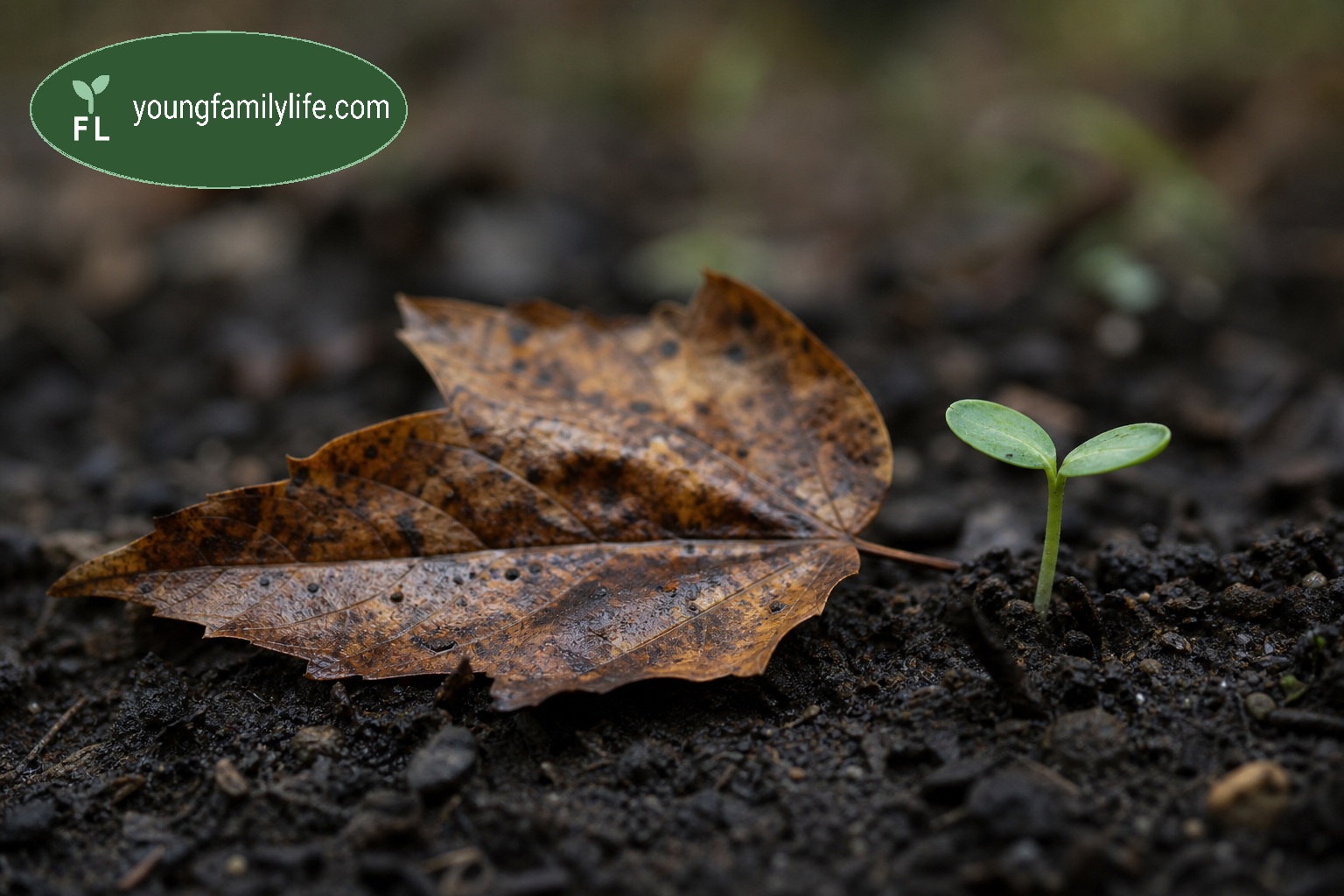
A leaf falls in October. By spring, it isn’t there anymore — not as a leaf. It’s in the soil, in the roots of whatever grew back, possibly in the leaf that replaces it next autumn. Nothing about that leaf vanished. It moved.
This happens so quietly and so constantly that it’s easy to miss what it actually means: nothing new can grow without something old breaking down first. Not sometimes. Not usually. Always. It isn’t a poetic way of describing autumn — it’s closer to a rule the whole planet runs on, and it goes a long way further back than autumn does.
The Universe’s Oldest Recycling Problem
Rewind past leaves, past soil, past life itself, all the way back to the very beginning of everything. At that point, there was almost nothing to build with — mostly hydrogen, a little helium, barely anything else. No carbon. No oxygen. None of the material a body is actually made from existed yet.
The first stars changed that. Deep inside them, under enormous pressure, hydrogen fused into helium, and helium slowly fused into heavier things — carbon, oxygen, the beginnings of a much richer periodic table. But there was a catch. All of that new material stayed locked inside the star. It went nowhere. It helped no one.
It took the star dying — often in a vast explosion — to scatter everything it had built out into space, where it eventually became part of the next generation of stars, and eventually planets, and eventually the specific carbon atoms currently doing the work of holding a human body together. Every one of those atoms exists because an earlier star died to release it. There was no other way to get them out.
The Same Rule, Much Smaller and Much Faster
What happens across billions of years in space happens across a single season in a garden, a forest, or a compost bin — same rule, different timescale. A living thing spends its life holding onto a set of essential nutrients: carbon, nitrogen, phosphorus, and others, taken in from its surroundings and built into its own body. Those nutrients don’t multiply. There’s a fixed, limited supply on Earth, and it has to go somewhere once one living thing is finished using it.
That’s what decomposition actually is. Fungi and bacteria break down what’s left behind, releasing those locked-up nutrients back into the soil in a form plants can use again. Without that step, nothing would go missing exactly — but it would all stay trapped in whatever was already alive, unavailable to anything new. Nothing else could grow. The system would simply run out of usable material and stop.
Decay Showing Up in Unexpected Places
Once this pattern is noticed, it turns up almost everywhere, often in places that don’t look like decay at all on the surface.
A forest fire looks like pure destruction while it’s happening. But some ecosystems — certain pine forests are the clearest example — have grown so dependent on periodic fire that their seed cones only open and release seeds when exposed to intense heat. The fire clears away built-up dead material, returns its locked-in nutrients to the soil in a single fast pulse, and creates open, sunlit ground for the next generation to take root in. Suppress the fires for too long, as land managers have sometimes done with good intentions, and the whole system can start to struggle — too much old material stacking up, not enough decay happening, nothing new getting the space or the nutrients it needs to grow.
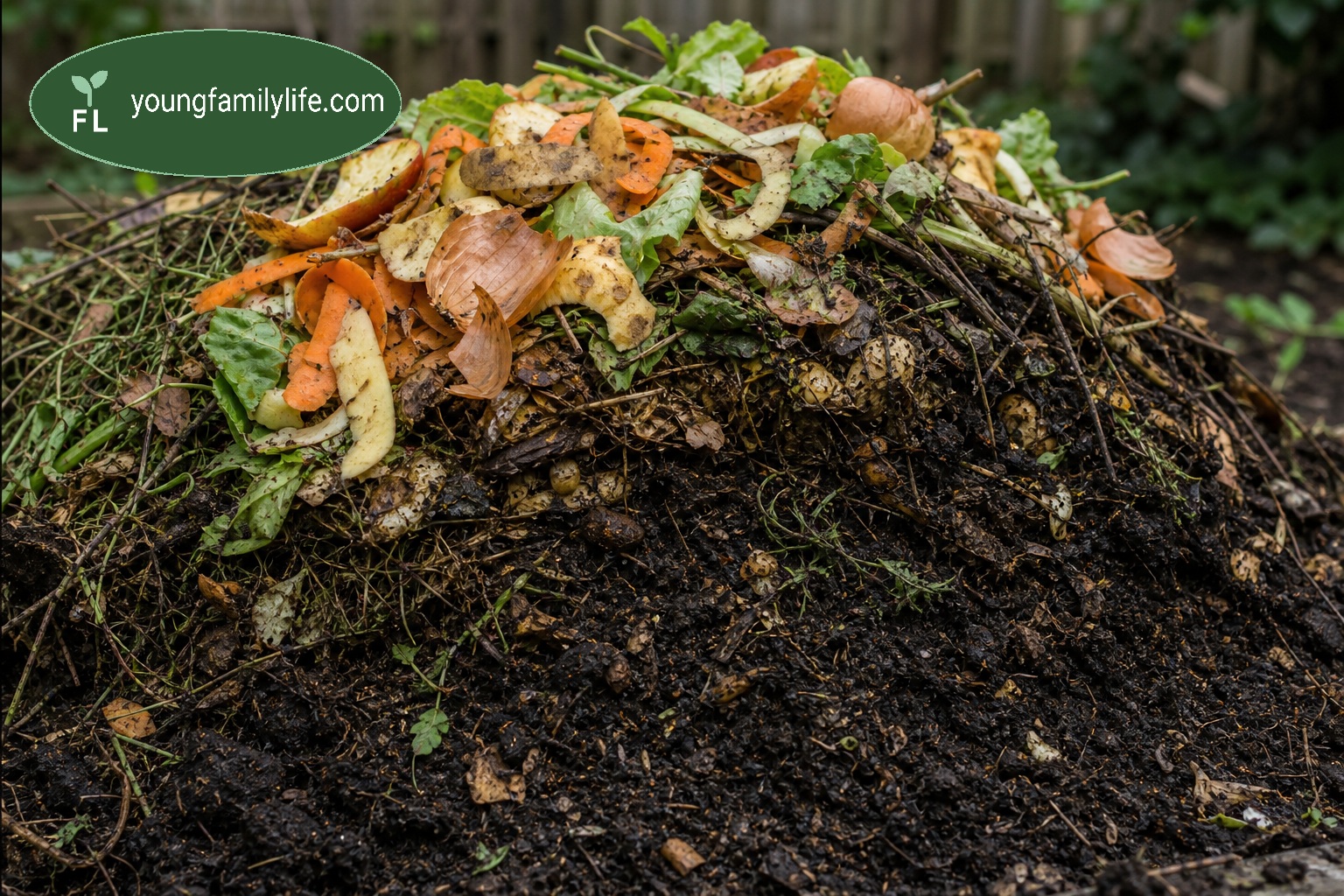
A compost heap does the same job at kitchen scale. Vegetable peelings, dead leaves, spent coffee grounds — all of it looks like rubbish while it’s happening. A few months later, it’s the richest material a gardener can put back into soil, precisely because it’s been thoroughly broken down rather than thrown away intact.
Even inside a living body, the same principle is quietly running all the time. Human skin entirely replaces itself roughly every month; the lining of the gut, every few days. Old cells don’t get kept — they’re broken down and cleared away, and the raw material gets reused to build the new ones. A body a person had ten years ago, cell for cell, isn’t the body they’re standing in today. It was recycled, continuously, without anyone noticing it happening.
Ecosystems Built to Wait for Death
Some examples aren’t about slow, steady recycling at all. They’re about whole communities of living things built around waiting for one death to happen — and then moving fast once it does.
Under almost every forest floor, threads of fungus spread through the soil, connecting the roots of different trees. Some of this fungus is a straightforward decomposer — breaking down fallen leaves and dead wood, releasing their nutrients. But the same fungus often does something else too. It wraps around a living tree’s roots and trades with it directly: sugar from the tree, in exchange for nutrients the fungus has pulled up from the soil — nutrients that mostly came from things that already died. A tree standing tall and green above ground is often living, underground, off the dead.
This is part of why some landowners are now choosing to step back rather than tidy up. At Somerleyton Estate in Suffolk, sections of land have been deliberately taken out of intensive farming and left to rewild — dead wood left where it falls, herbivores left free to graze, feed, and eventually die on the land rather than being removed. The idea isn’t neglect. It’s trusting that the same decay-and-renewal cycle running under every forest floor will do work no amount of active management can replace.
On the plains of East Africa, this happens fast enough to watch. When an elephant dies, vultures spot the body from the sky within minutes. But they can’t break through its thick hide alone. So they wait — for lions, or more often hyenas, to open it first. Once that happens, everything moves quickly. Rangers at one South African reserve expected a carcass that size to take four or five days to disappear. It took 36 hours. Hyenas first. Then vultures. Then storks, maggots, dung beetles — each taking what the last group left behind. By the next morning, only bones remained. The ground underneath, soaked in blood, stayed unusually rich for a long time after.
At the bottom of the deep ocean, the same thing happens on a completely different clock. The deep sea gets very little food — it’s closer to a desert than most people picture. When a whale dies and sinks, its body can land in exactly that kind of empty place. One whale can deliver more food to that patch of seafloor in a single moment than would normally drift down there across two thousand years. Deep-sea animals seem to wait for this. Scavengers strip the soft flesh first, over months or up to two years. Smaller creatures then work through the nutrient-rich mud underneath, for a year or two more. Finally, bacteria break down fat locked inside the bones themselves — a stage that can last for decades, sometimes keeping a whole community fed for up to a century after the whale died.
Three completely different scales. A forest. A plain in Kenya. The ocean floor. Same shape, every time: life built around one certainty — that death will eventually deliver what’s needed.
What This Means, Once It’s Noticed
Decay doesn’t usually get talked about as something a system needs. It tends to get treated as the sad part, the ending, the thing that happens after the interesting part is over. The pattern running from dying stars to falling leaves suggests something different: decay isn’t what happens after the story. It’s the mechanism the entire story depends on to keep being told.
This doesn’t make loss feel smaller, and it isn’t meant to. But it does mean that decay was never separate from growth — it was always the first half of it, whether the growth in question is a forest, a body, or a universe still working out what it can build next.
Topics: #HeyWantToKnow #Decomposition #Ecology #Decay #StellarNucleosynthesis #Rewilding #FoodWebs #NutrientCycles #WhyOld #Syntropy
Further Reading
These links dig deeper into the topics covered here:
Ecology and Decomposition:
- EBSCO: Decomposers — how fungi and bacteria break down organic material and return nutrients to the soil.
- Science News Explores: Recycling the Dead — on why decomposition is the start of new growth, not just the end of the old.
Stars and Stellar Nucleosynthesis:
- David Maiolo: The Evolutionary History of Stars and the Synthesis of Heavy Elements — how dying stars seed the next generation with heavier elements.
- Wikipedia: Stellar Population — on Population III stars and the earliest generation of stars in the universe.
How This Essay Reflects YFL Values
This piece keeps the science plain and the choice entirely with the reader. It names what decomposition, stellar death, and rewilding all have in common — without ever suggesting the reader should feel differently about loss because of it. Readers who find this reframing useful are free to carry it forward however suits them. That is the only assumption this platform makes.
Related YFL Essays and Resources
Why Old? — of all things? — The full Repositorium essay behind this whole family — all six parts, with complete evidence and citations.
In Other Words: The Randomness Already Inside You — The physics of why a body doesn’t need bad luck to age — quantum tunnelling writing mutation into DNA.
In Other Words: Why Bigger Doesn’t Mean Greater Longevity? — Why the animal kingdom’s real longevity record-holders aren’t the biggest or most complex — dinosaurs included.
In Other Words: What Long Childhoods Are For — Why elephants, orcas, and beavers all pair long lifespans with long childhoods — and what that trade buys a species.
In Other Words: When Wisdom Turns to Dogma — Why age doesn’t reliably produce wisdom or rigidity — and what actually decides which way a person goes.
In Other Words: Entropy and Syntropy — The Same Universe, Two Directions — The bridge piece connecting this whole family directly to Syntropy and the Tag.
The Land That Heals Itself — Britain’s Ecological Farming Revolution — more on the Somerleyton Estate rewilding example and what deliberately stepping back from land management can achieve.
Copyright Notice
© 2026 Steve Young and YoungFamilyLife Ltd. All rights reserved.
All original content on YoungFamilyLife — including essays, articles, frameworks, and other written material — is the intellectual property of Steve Young and YoungFamilyLife Ltd, unless credited to another source. Content is developed collaboratively using AI assistance to research sources and refine structure, while all intellectual authorship, original insight, and professional expertise remain those of the author.
No part of this website may be reproduced, distributed, or transmitted in any form without prior written permission, except brief quotations for noncommercial use.
For permission requests, contact: info@youngfamilylife.com