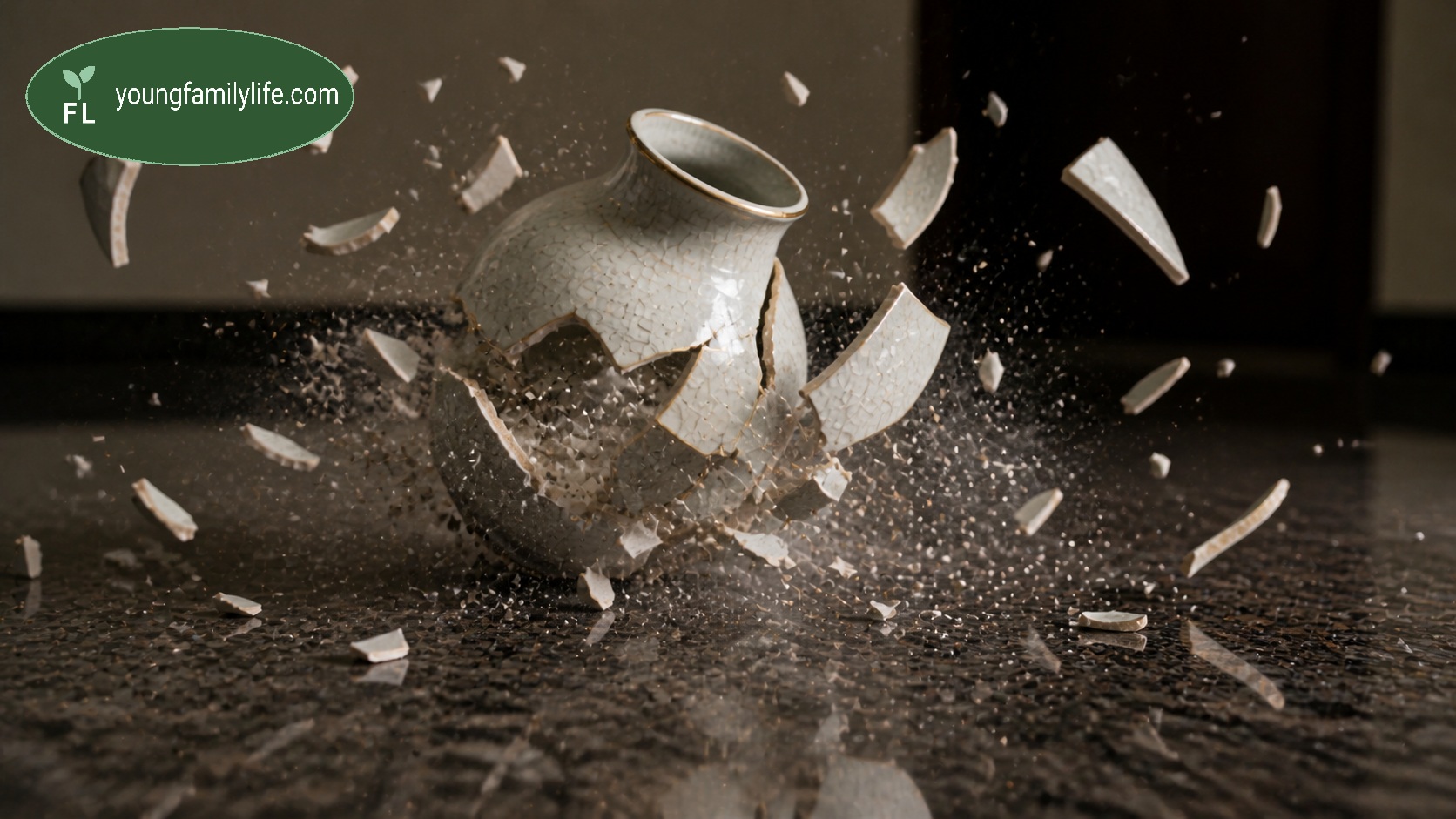
Two essays, one underlying question
Two pieces in this collection look, on the surface, like they have nothing to do with each other. One examines why a commercially disastrous, critically dismissed 1995 film called Hackers somehow became more culturally meaningful with every passing decade. The other examines why a body ages, right down to the physics happening inside individual strands of DNA. But both essays are actually built on the same underlying question: how does order behave over time, when the universe's basic tendency is toward disorder?
The two essays answer it from opposite ends, and putting them side by side makes something clearer than either manages alone.
Entropy, in plain terms
Entropy is usually summarised as "things fall apart." That's true, but it undersells what's actually happening. In physics, entropy describes how likely a given arrangement of a system is. Disordered arrangements vastly outnumber ordered ones — so left alone, systems drift toward disorder not because anything is pushing them there, but because disorder is simply far more probable.
This isn't only true at the scale of everyday objects. It reaches right down into quantum physics — the physics of individual atoms and particles — where a genuine source of randomness sits inside every strand of DNA. A proton in one of the hydrogen bonds holding DNA's two strands together has a small chance of quantum tunnelling into an unusual position, occasionally flipping a tiny part of the genetic code by pure chance. This is real, measurable, and happens at ordinary body temperature — not some rare extreme condition. It's one of the actual physical starting points of ageing, explored in full in the companion essay Why Old? — of all things?.
Syntropy, its mirror image
Syntropy is the less familiar half of the pair — the tendency, in certain systems, for order and complexity to increase rather than dissolve. The essay Syntropy and the Tag uses this idea to explain something genuinely strange: how a film that failed by every commercial and critical measure in 1995 somehow became more meaningful over the following three decades, as different communities — technologists, queer audiences, film students — each found something true in it that its own makers never intended to put there.
That essay argues the film's meaning wasn't designed. It accumulated, by accident, because a specific set of elements happened to converge at the right time. Order, quietly assembling itself out of what looked, at the time, like pure chaos and failure.
The same physics, doing two different jobs
Here's where the two essays meet. Quantum tunnelling inside DNA is genuine, physical randomness — no different, in kind, from the kind of unpredictable convergence that let Hackers accidentally encode meaning it was never built to carry. Both are the universe behaving unpredictably at a small scale. What differs isn't the physics. It's what's receiving it.
Inside a body, that randomness mostly produces disorder — errors in the genetic code, accumulating slowly over decades, that a repair system can't always catch. Inside a culture — the communities that kept returning to a failed film, decade after decade, and kept finding new things in it — the same basic unpredictability produced the opposite: meaning building up rather than breaking down.
Entropy and syntropy, in other words, aren't two separate forces locked in a permanent struggle against each other. They're two different outcomes the same underlying unpredictability can produce, depending entirely on what kind of system it's happening inside. A strand of DNA and a cult film script are both, at bottom, systems capable of holding a random event — and what determines whether that event becomes decay or meaning has everything to do with the structure receiving it, not the randomness itself.
Why this matters for both essays
This changes how both essays are best read — not as opposites, but as two case studies of the same underlying physics. Why Old? traces what happens when quantum-level randomness meets a body that evolution never built to last. Syntropy and the Tag traces what happens when the same kind of randomness meets a piece of culture that turned out to be exactly the right shape to hold onto it.
Neither essay is really about film, or about ageing, at its core. Both are about the same much older question: what a universe that runs on randomness ends up building, or unbuilding, once that randomness lands somewhere specific.
This piece connects the Repositorium essays Why Old? — of all things? and Syntropy and the Tag: The Accidental Prophecy of the Awful Popcorn Movie Hackers — read together, they cover the same physics from opposite directions.
Topics: #InOtherWords #Entropy #Syntropy #WhyOld #SyntropyAndTheTag #QuantumPhysics
Related YFL Content
Why Old? — of all things? — The full Repositorium essay behind this whole family — all six parts, with complete evidence and citations.
Hey!, Want To Know: How Dependent We Are on Decay? — The HWTK companion — decay as a generative process, from compost heaps to dying stars, in discovery-first form.
In Other Words: The Randomness Already Inside You — The physics of why a body doesn’t need bad luck to age — quantum tunnelling writing mutation into DNA.
In Other Words: Why Bigger Doesn’t Mean Greater Longevity? — Why the animal kingdom’s real longevity record-holders aren’t the biggest or most complex — dinosaurs included.
In Other Words: What Long Childhoods Are For — Why elephants, orcas, and beavers all pair long lifespans with long childhoods — and what that trade buys a species.
In Other Words: When Wisdom Turns to Dogma — Why age doesn’t reliably produce wisdom or rigidity — and what actually decides which way a person goes.
Syntropy and the Tag: The Accidental Prophecy of the Awful Popcorn Movie Hackers — the yin/yang companion essay this whole family sits alongside.
Copyright Notice
© 2026 Steve Young and YoungFamilyLife Ltd. All rights reserved.
All original content on YoungFamilyLife — including essays, articles, frameworks, and other written material — is the intellectual property of Steve Young and YoungFamilyLife Ltd, unless credited to another source. Content is developed collaboratively using AI assistance to research sources and refine structure, while all intellectual authorship, original insight, and professional expertise remain those of the author.
No part of this website may be reproduced, distributed, or transmitted in any form without prior written permission, except brief quotations for noncommercial use.
For permission requests, contact: info@youngfamilylife.com