Introduction
Every physical system in the universe moves in one direction: toward disorder. This is not a metaphor borrowed from biology to describe ageing — it is a law of physics that ageing happens to obey, along with stars, coastlines, and unwashed dishes. What makes a body different from a dish is that a body spends decades actively fighting the current before the current eventually wins. This essay is about that fight: what drives it, what it costs, and what it produces along the way that has nothing to do with losing.
It sits as a companion piece to an earlier essay in this collection, Syntropy and the Tag, which examined how order can emerge from chaos by accident — a failed film that, through a fluke of timing and convergence, encoded meaning it was never designed to carry. This essay takes the opposite direction of travel. Where that essay asked how order accumulates, this one asks how it degrades — and finds, by the end, that the two processes are not as opposed as they first appear.
Part One: The Physics of a Random Body
Entropy is usually introduced as a simple idea: things fall apart, disorder increases, the universe runs down. This is true, but it undersells what entropy actually is. In statistical mechanics, entropy is a measure of probability — the number of ways a system's microscopic details can be rearranged while producing the same macroscopic outcome. Disordered arrangements vastly outnumber ordered ones, so systems drift toward disorder not because anything is pushing them there, but because disorder is simply more likely.
Quantum mechanics does more than sit underneath this picture as background scaffolding — it deepens it in ways worth taking seriously. Classical physics struggled to define entropy rigorously until quantum theory supplied genuinely discrete, countable microstates to work with (the “Gibbs paradox” was a real problem before this). Quantum mechanics also introduces a form of disorder classical thermodynamics has no analogue for: entanglement between a system and its environment can produce entropy even when the combined system remains in a single, perfectly well-defined state. And the fundamental equations of quantum mechanics are time-symmetric — they do not, by themselves, prefer past over future. One of the more compelling explanations physicists offer for why we nonetheless experience time and disorder moving in one direction is decoherence: quantum information leaking irreversibly into the vast number of degrees of freedom in the surrounding environment. The arrow of time, on this account, is not fundamental. It is what large numbers of quantum interactions look like from the inside.
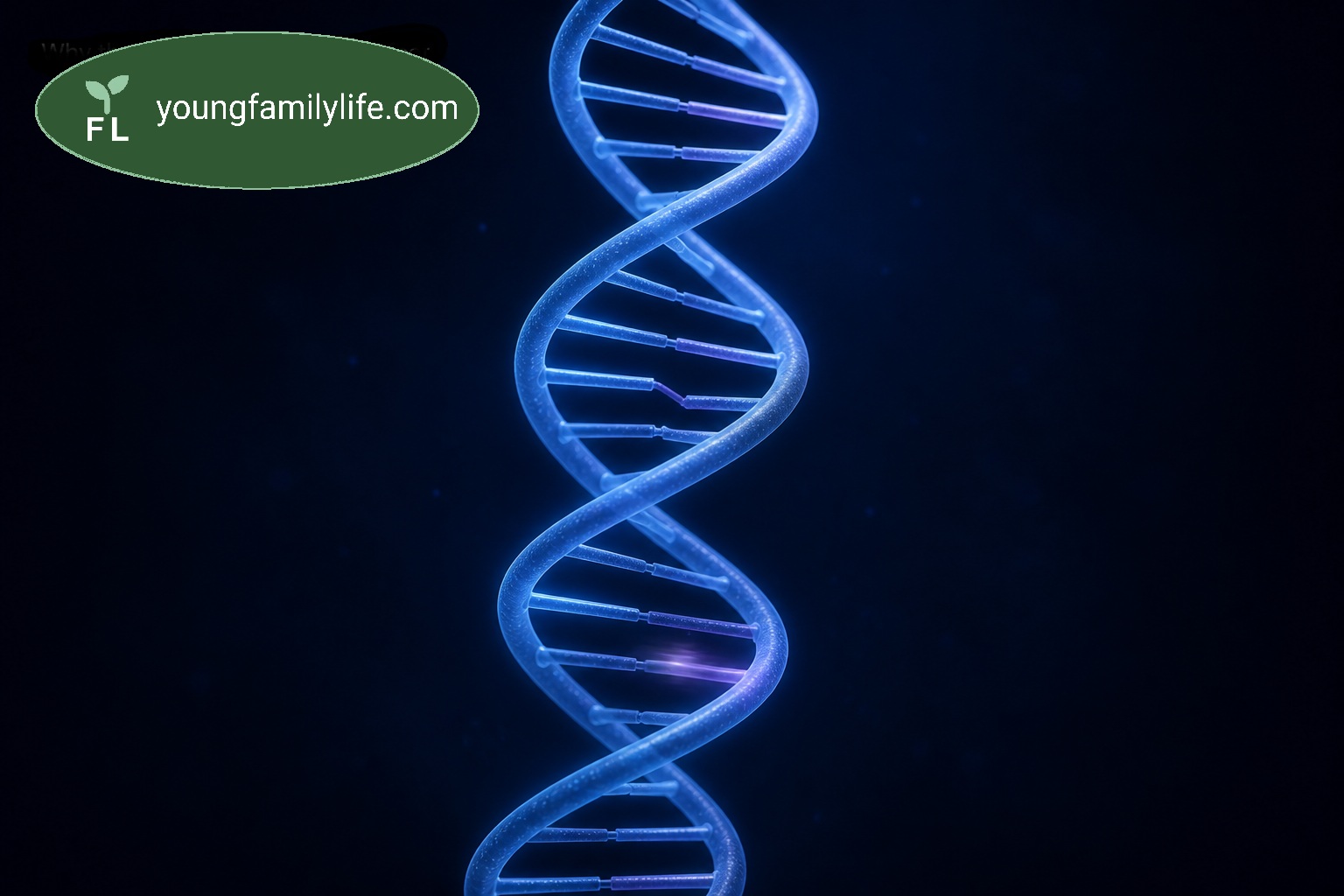
This is not an abstract detour. It becomes directly, physically relevant to ageing through a mechanism first proposed by the physicist Per-Olov Löwdin in 1963. DNA’s double helix is held together by hydrogen bonds, and within each of those bonds a proton has a small but genuinely non-zero probability of tunnelling — a purely quantum phenomenon with no classical equivalent — from one nucleotide base to the other. When it does, it briefly converts a base pair into a rare tautomeric form. If DNA replication happens to occur during that fleeting window, the tautomeric shift is copied into the genetic code as a permanent, spontaneous mutation (Löwdin, 1963). Recent theoretical work modelling this as an open quantum system has found that the tunnelling contribution to this process is several orders of magnitude larger than the classical, over-the-barrier route, and significant even at ordinary biological temperatures (Slocombe, Al-Khalili & Sacchi, 2021).
This is, quite literally, quantum randomness writing itself into a body. Every cell, every day, carries some background rate of mutation that traces back not to radiation, not to toxins, not to lifestyle, but to the basic uncertainty built into the laws of physics. Ageing has a starting point that predates biology entirely.
Part Two: An Indifferent Architect
A single quantum-random mutation is not, by itself, a crisis. Cells have repair machinery precisely because damage of this kind is expected, constant, and mostly survivable. The problem is what happens as this machinery is asked to run for decades: DNA damage accumulates with age, driven partly by rising production of reactive oxygen species and partly by a measurable decline in the cell’s own capacity to repair damage as it grows older (Vijg & Suh, 2007). The system meant to catch these errors becomes less reliable the longer it operates — and the errors that slip through, whether from telomere attrition or unrepaired lesions, are what push cells toward senescence: a state of permanent, irreversible growth arrest that itself becomes a driver of ageing and age-related disease as senescent cells accumulate in tissue over time (Schumacher, Garinis & Hoeijmakers, 2008).
Why doesn’t evolution simply fix this? The honest answer is that it has no reason to. This collection’s earlier series, Changing People: A Psychological Impossibility, used the example of the recurrent laryngeal nerve — a nerve inherited from fish ancestors that loops absurdly around the chest to connect two points a few millimetres apart — to make a point about evolution’s actual method: it modifies whatever already exists, and it never redesigns from scratch. That essay’s companion piece, Influence and Adaptation: What Darwin Actually Taught Us, made the same point from a different angle — a popular quote about responsiveness to change is often misattributed to Darwin, whose real insight was that fitness means compatibility with existing environmental conditions, not effort, intention, or improvement (Dennett, 1995).
Ageing follows the identical logic. Natural selection has essentially no power to remove a genetic trait whose costs only appear after reproduction has already happened, because by that point the trait carries no further reproductive penalty to select against. This is the core insight behind two long-standing theories of the evolution of ageing: antagonistic pleiotropy, which holds that some genes actively helpful early in life become harmful only in old age, past the point where selection can see them (Williams, 1957), and the disposable soma theory, which frames the body as an organism’s temporary vehicle for its genes — worth maintaining only as long as it serves reproduction, after which continued investment in repair stops paying its way (Kirkwood, 1977).
Evolution, in other words, never built a body designed to last. It built a body good enough to reproduce, running on repair systems that were never asked to hold up indefinitely — the same “good enough, not designed” logic behind the laryngeal nerve, now operating on a much larger scale, inside every cell, for an entire lifetime.
The visible evidence of this indifference is everywhere: wrinkling skin, slowing movement, slower recovery from injury or illness. Cancer risk also rises with age, and the underlying mechanism is genuine — somatic mutations accumulate across tissues over a lifetime and can drive disease through clonal expansion (Vijg & Dong, 2020). But this deserves a careful caveat rather than a clean headline. Age-related cancer statistics are confounded by cumulative lifetime exposure to external mutagens, by a lifetime’s accumulated cell divisions, and by detection improving as people are monitored more closely later in life. Age is a real and logically coherent contributor to cancer risk — but it is one factor among several, not a simple multiplier on its own.
Part Three: What the Long Record Actually Shows
If age were simply a straightforward story of decline, the animal kingdom’s own data should show the most complex, most “advanced” organisms living the longest. It shows almost the opposite. The genuine record-holders for longevity are not mammals, not birds, and certainly not humans — they are slow, cold-water, often structurally simple organisms: ocean quahog clams, with a specimen confirmed to have lived 507 years (List of longest-living organisms, n.d.); Greenland sharks, estimated by radiocarbon dating of their eye lenses at 272 to as much as 392 years old, animals that do not even begin breeding until around age 150 (Nielsen et al., 2016); and deep-sea tube worms living without mouths or digestive systems, drawing energy instead from bacteria that convert hydrothermal sulfur, with some individuals estimated well over 300 years (Visual Capitalist, 2022). The general pattern across the animal kingdom holds with remarkable consistency: reptiles and other animals with slow metabolisms tend to outlive warm-blooded animals of similar size (Australian Museum, n.d.). Longevity correlates with how slowly a metabolism runs — not with intelligence, complexity, or evolutionary “advancement.”
The fossil record extends this same pattern back across 165 million years, and it is far less speculative than it might seem. Since the late 1990s, palaeontologists have been able to directly age dinosaur bones using Lines of Arrested Growth (LAGs) — annual growth rings, closely analogous to tree rings, deposited in bone tissue and readable under polarised light (Fossil Wiki, n.d.). What they show overturns an older, more romantic assumption: the largest dinosaurs were not, in fact, the longest-lived. Sauropods — the giant long-necked herbivores — hold the dinosaur longevity record, but at a comparatively modest 60 to 80 years, on the same order as a modern elephant (Holtz, cited in Live Science, 2024). Tyrannosaurus rex, despite its cultural status as the apex of Cretaceous power, lived shorter lives still — the Field Museum’s “Sue,” one of the most complete T. rex skeletons ever recovered, died at just 33 (Live Science, 2024). Early, more dramatic estimates of 300-year sauropod lifespans, based on loose comparisons with slow-metabolism reptiles like crocodiles, have since been revised sharply downward as growth-ring evidence accumulated (BBC Science Focus, 2023). The correction itself is instructive: even scientific certainty about ageing has had to be earned incrementally, against the pull of a more impressive-sounding story.
The through-line from the Jurassic to the present ocean floor is the same one running through Part One and Part Two: bigger, more complex, more dominant does not mean longer-lived. Slower metabolism does. This has been true for at least 165 million years, and it establishes, by elimination, the question the rest of the essay has to answer: if physical longevity was never a reward for sophistication, what — if anything — does a longer life actually buy a species that has one?
Part Four: The Syntropy Counter-Current
Syntropy and the Tag borrowed its central concept from the mathematician Luigi Fantappiè, who described syntropy in 1942 as the tendency of some systems to move toward increasing order and complexity — the mirror opposite of entropy’s drift toward disorder (Fantappiè, 1942). That essay used it to explain how an accidentally prophetic, commercially disastrous film accumulated genuine cultural meaning over three decades. This essay’s fourth part asks whether something structurally similar happens inside long-lived, social species themselves — and the evidence suggests it does, though by design this time, not by accident.
Across the animal kingdom, an extended childhood and a long adult lifespan appear together with striking consistency: elephants, orcas, parrots, great apes, and humans all combine unusually long juvenile periods with unusually long total lifespans for their size and class. This is not coincidental. Life-history theory frames it through the embodied capital hypothesis: a long, costly, unproductive childhood only pays off evolutionarily if there is enough remaining adult life afterward to put the accumulated skills and knowledge to use (Kaplan et al., 2000). A species cannot afford years of learning without decades left to spend it.
Beavers are a smaller-scale but genuinely illustrative case. Wild beavers typically live 10 to 12 years, occasionally reaching considerably longer in especially favourable or protected conditions (PBS Nature, 2026), against a maturation period of roughly one and a half to three years during which kits remain with their parents learning dam-building, lodge maintenance, and territorial behaviour — the practical, transmitted knowledge of beaver society (Institute for Environmental Research and Education, 2025). A rodent living roughly ten times longer than its body size would predict is not a random outlier; it is a species whose survival depends on knowledge that has to be taught, which means it depends on adults living long enough to teach it.
This reframes what “old” means inside a social species. The physical entropy documented in Parts One and Two does not stop happening — the body still accumulates quantum-random mutation, still loses repair capacity, still slows down. But running in parallel is a second, syntropic process: the accumulation and transmission of knowledge, exactly the kind of local, temporary order-against-the-current that Fantappiè’s concept describes. Old age, on this account, is not simply decline overtaking a system. It is the tail end of a strategy that trades a slower, more expensive, more failure-prone body for a more capable transmission of order to the next generation — syntropy purchased with the currency of entropy.
This transmission also sits inside a live and unresolved argument in evolutionary biology, between the physiologist Denis Noble and the biologist Richard Dawkins. Dawkins’s gene-centric view of evolution holds that genes are the level at which meaningful evolutionary change actually happens, with organism-level behaviour treated as downstream of genetic instruction. Noble’s counter-position, developed across decades of physiological research into how living systems actually function, denies that any single level — gene, cell, or organism — holds privileged causal status; evolution, on his account, involves interaction between multiple levels at once, none of which can claim sole credit. The knowledge transmitted from an old beaver to a young one, or an old elephant to a calf, is a genuine test case for that argument: it carries no genetic signature at all, yet it demonstrably shapes which individuals and which groups survive, and it can update in a single generation in response to an immediate environmental change — something DNA-level adaptation, dependent on selection acting across many generations, simply cannot match for speed. Whichever side of that debate eventually prevails on genes specifically, the embodied capital pattern documented here stands as evidence that a meaningful share of what keeps a long-lived, social species going was never written into DNA at all.
Part Five: Elder Wisdom — The Ledger
That transmission has a specific behavioural signature worth naming directly: elders, across social species, tend toward greater risk-aversion than the young. This is not simply anecdotal. Risk tolerance measurably declines with age on average, for reasons that are partly hormonal and partly a straightforward accumulation of data about what risk actually costs. One proposed evolutionary account of this pattern in humans specifically — the grandmother hypothesis — argues that post-reproductive individuals contribute to a group’s survival not through further reproduction of their own but through risk-calibrated guidance, resource-sharing, and support for the young, and that this may help explain the unusually long post-reproductive lifespan found in humans and, notably, orcas (Hawkes, O’Connell & Blurton Jones, 1998).
Cognitive science offers a parallel, complementary distinction: crystallised intelligence — accumulated knowledge, pattern recognition, and judgement — tends to hold steady or even improve with age, while fluid intelligence — raw processing speed and novel problem-solving — tends to decline (Cattell, 1963). Elder wisdom, understood this way, is a genuine trade rather than an unqualified gift: slower on the unfamiliar, but faster and more reliable at recognising what merely looks new but is, underneath, an old pattern wearing different clothes.
The ledger, however, has a cost side, and it deserves equal honesty. The same crystallisation that produces wisdom can calcify into rigidity — a pattern-library built from real decades of experience becoming a fixed lens through which everything new is filtered and dismissed, rather than a flexible tool applied freshly to each situation. Confidence built on a long record of having been right can curdle into certainty that stops updating altogether.
A sharp illustration of this cost — carefully bounded to what is actually being illustrated, since it does two distinct jobs at once — comes from the writer Christopher Hitchens’s public critique of Mother Teresa. In The Missionary Position (1995) and the earlier documentary Hell’s Angel, Hitchens argued that Teresa’s accumulated moral authority had calcified into something closer to unaccountable doctrine than open wisdom: that her theology treated suffering as spiritually meritorious rather than as something to be actively relieved, that the scale of donations she received was disproportionate to the standard of medical care her institutions provided, and that her public positions on contraception in the developing world reflected doctrine overriding the people that authority claimed to serve. This remains one of the more genuinely contested biographical disputes of the late twentieth century — supporters point to extensive testimony from doctors, volunteers, and those who received care describing something closer to the opposite of Hitchens’s account — and it is presented here as his analytical lens on the case, not as a settled verdict. What it illustrates, on either reading, is the underlying risk: that accumulated authority can calcify into something that no longer answers to scrutiny.
Christopher’s brother Peter Hitchens supplies a second, entirely separate illustration — an elder converging toward traditional religious and social authority from the opposite direction to his brother, having moved from a similar early scepticism toward an adult defence of the very institutions Christopher continued to challenge. Placed alongside each other, the two brothers show that ageing does not push everyone toward the same conclusion about authority and tradition; it can just as easily produce two opposed, equally committed positions from two people who started in similar places.
What determines which way a given elder goes is not simply a matter of chance, and this collection’s own material already supplies the missing variable. The 20/80 percenter framework — the observation, echoed across social species from ants to fish to birds, that a population reliably divides into roughly 20% who explore, take risks, and break from established patterns, and 80% who maintain and follow them — appears to function as an evolutionary checks-and-balance mechanism entirely independent of age. A population is therefore running two separate risk-calibrating axes at once: an age axis (young/risky against old/risk-averse) and a type axis (20-percenter/risky against 80-percenter/risk-averse). The type-trait does not disappear with age — it interacts with it. An 80-percenter whose disposition was already risk-averse at twenty-five has that disposition reinforced by decades of caution appearing to have been vindicated, which is precisely the calcification this section has just described. A 20-percenter, by contrast, is more likely to remain disruptive into old age, because the underlying disposition actively resists the pull of age toward caution rather than compounding it.
This is the missing piece the Hitchens comparison leaves open: ageing does not produce wisdom or dogma as a single, uniform outcome. Which one a given person moves toward has as much to do with which type they already were at twenty-five as it does with how many years have passed since.
Framed against the Noble-Dawkins argument introduced in Part Four, wisdom and dogma can be understood as two states of the same underlying system rather than two different traits. Neither lives in DNA; both are accumulated, transmissible information, in Noble’s systems-level sense. Wisdom is that system still doing its job — still checking new situations against the pattern-library it has built rather than simply filing them away as already known. Dogma is the same system after it has effectively stopped updating: still confident, still fluent in its own authority, but no longer genuinely responsive to anything new arriving. From the outside, both can look identical — an older person holding a strong opinion. The difference is whether the system generating that opinion is still alive to new information, or has quietly stopped being.
Part Six: The Universe Runs on Its Own Compost
There is one further layer worth adding alongside everything the essay has argued so far, and it shifts the register of the whole piece rather than undercutting it: decay is not simply something the universe permits. It is something the universe requires, and has required from the very beginning, in order to produce the material any of this — stars, planets, bodies — is made of.
The universe’s first generation of stars, known as Population III stars, formed from almost nothing but hydrogen and helium left over from the Big Bang — the periodic table, at that point, barely existed (Stellar population, n.d.). Those first stars fused hydrogen into helium and, in their cores, gradually built helium into carbon, oxygen, and the other lighter elements. But fusion alone does not distribute anything; it only concentrates it inside a dying star. It is the star’s death — often a violent supernova — that scatters those newly forged elements out into space, enriching the surrounding gas clouds from which the next generation of stars, and eventually planets, would form (Maiolo, 2024). Each generation of stars died to seed the next with heavier material than it had itself begun with — carbon, oxygen, iron, calcium, all the elements a body is built from — accumulating gradually across roughly 13.8 billion years of this same cycle repeating (Maiolo, 2024). There was no other route available. The elements that make up a human skeleton did not exist at the universe’s beginning; they exist now only because earlier stars died.
The same logic operates at a vastly smaller and faster timescale in every ecosystem on Earth, and it is no less structural. Living tissue holds a finite, non-renewable set of essential elements — carbon, nitrogen, phosphorus — captured from the environment during life. Decomposition is what releases them again: fungi and bacteria secrete enzymes that break down complex organic material, mineralising it into simpler forms that plants can take up and rebuild into new growth (EBSCO, n.d.). One ecologist put the underlying point about as plainly as it can be put: decomposition is not only the end of everything, but also the start — without decay, nothing now alive would exist (Recycling the dead, 2019). This is not a poetic flourish. Without death and decomposition, the finite store of nutrients on Earth would eventually lock itself permanently into whatever organisms happened to be alive at the time, and nothing new could grow at all.
This reframes the whole essay’s argument one final time. Parts One and Two described decay as something imposed on a body by indifferent physics and indifferent evolution — true, but incomplete on its own. Decay is also the mechanism by which raw material becomes available for anything new to exist in the first place. A body’s death does not only end a syntropic project of accumulated knowledge, as Parts Four and Five described; it also returns the body’s own physical material to a shared pool that every subsequent generation, human and otherwise, depends on to be built at all. The same universe that writes mutation into DNA through quantum tunnelling, and that never designed a body to last, also runs on a strict, non-negotiable requirement: nothing new can be built without something old breaking down first, at every scale, from a dying star to a fallen leaf.
Conclusion: Negotiated Entropy
The arrow of time does not care about meaning. Quantum randomness writes errors into DNA whether or not anyone is watching; evolution has never once paused to ask whether a repair system will still be needed in fifty years; the fossil record shows that even the largest, most dominant creatures the planet has produced bought no exemption from any of it. Physically, the case for entropy winning is total, and nothing in this essay has argued otherwise.
And yet something real is built in the meantime, in two separate ways. Syntropy and the Tag closed on the idea that meaning can accumulate through time even from pure accident — a code embedded without intention, finding new receivers decade after decade. Long-lived, social species do the same thing on purpose: trading a body that will fail against entropy on a predictable, quantum-random schedule for the chance to transmit accumulated order — knowledge, judgement, culture — to whoever comes next. That transmission is not guaranteed to stay wise; it can calcify as easily as it can illuminate, and which outcome a given elder produces depends on dispositions that were already present long before old age arrived to reveal them.
And beneath even that, at a scale from dying stars to fallen leaves, decay is not simply the price of having lived — it is the mechanism that makes anything new possible at all. The carbon in a body was forged by a star that had to die to release it. The nutrients a body eventually returns will build whatever grows next. Death is not only entropy’s victory over a single system; it is also the universe’s oldest and only working method for supplying the material future systems will need.
Old age, seen this way, is not simply where entropy wins. It is the specific, costly place where entropy and syntropy are forced to negotiate inside a single body — a negotiation that is real, ongoing, never fully settled in either direction until it ends, and whose ending, even then, is not the last word. It is a contribution to whatever comes next.
References
Australian Museum. (n.d.). Dinosaur lifecycles: From go to woe. https://australian.museum/learn/dinosaurs/dinosaur-lifecycles/
BBC Science Focus. (2023, July 12). What was the life expectancy of a dinosaur? https://www.sciencefocus.com/nature/what-was-the-life-expectancy-of-a-dinosaur
Cattell, R. B. (1963). Theory of fluid and crystallized intelligence: A critical experiment. Journal of Educational Psychology, 54(1), 1–22.
Dennett, D. C. (1995). Darwin’s dangerous idea: Evolution and the meanings of life. Simon & Schuster.
EBSCO. (n.d.). Decomposers. https://www.ebsco.com/research-starters/environmental-sciences/decomposers
Fantappiè, L. (1942). Principi di una teoria unitaria del mondo fisico e biologico. Humanitas Nova.
Fossil Wiki. (n.d.). Age determination in dinosaurs. https://fossil.fandom.com/wiki/Age_determination_in_dinosaurs
Maiolo, D. (2024, January 11). The evolutionary history of stars and the synthesis of heavy elements. https://www.davidmaiolo.com/2023/09/23/the-evolutionary-history-of-stars-and-the-synthesis-of-heavy-elements/
Recycling the dead. (2019, December 3). Science News Explores. https://www.snexplores.org/article/recycling-dead
Stellar population. (n.d.). In Wikipedia. https://en.wikipedia.org/wiki/Stellar_population
Hawkes, K., O’Connell, J. F., & Blurton Jones, N. G. (1998). Grandmothering, menopause, and the evolution of human life histories. Proceedings of the National Academy of Sciences, 95(3), 1336–1339.
Hitchens, C. (1995). The missionary position: Mother Teresa in theory and practice. Verso.
Institute for Environmental Research and Education. (2025). What age do beavers mature? https://iere.org/what-age-do-beavers-mature/
Kaplan, H., Hill, K., Lancaster, J., & Hurtado, A. M. (2000). A theory of human life history evolution: Diet, intelligence, and longevity. Evolutionary Anthropology, 9(4), 156–185.
Kirkwood, T. B. L. (1977). Evolution of ageing. Nature, 270, 301–304.
List of longest-living organisms. (n.d.). In Wikipedia. https://en.wikipedia.org/wiki/List_of_longest-living_organisms
Live Science. (2024, January 29). What was the typical life span of a dinosaur? https://www.livescience.com/animals/dinosaurs/what-was-the-typical-life-span-of-a-dinosaur
Löwdin, P.-O. (1963). Proton tunneling in DNA and its biological implications. Reviews of Modern Physics, 35, 724–732.
Nielsen, J., Hedeholm, R. B., Heinemeier, J., Bushnell, P. G., Christiansen, J. S., Olsen, J., Ramsey, C. B., Brill, R. W., Simon, M., Steffensen, K. F., & Steffensen, J. F. (2016). Eye lens radiocarbon reveals centuries of longevity in the Greenland shark. Science, 353(6300), 702–704.
Noble, D. (2006). The music of life: Biology beyond genes. Oxford University Press.
Noble, D., & Dawkins, R. (2022, June 4). Is the selfish gene holding back medicine and cancer cures? [Debate]. How The Light Gets In, Hay-on-Wye.
PBS Nature. (2026, February 11). Beaver fact sheet. https://www.pbs.org/wnet/nature/blog/beaver-fact-sheet/
Schumacher, B., Garinis, G. A., & Hoeijmakers, J. H. J. (2008). Age to survive: DNA damage and aging. Trends in Genetics, 24(2), 77–85.
Slocombe, L., Al-Khalili, J., & Sacchi, M. (2021). Quantum and classical effects in DNA point mutations: Watson-Crick tautomerism in AT and GC base pairs. Physical Chemistry Chemical Physics, 23, 4141–4150.
Vijg, J., & Dong, X. (2020). Pathogenic mechanisms of somatic mutation and genome mosaicism in aging. Cell, 182(1), 12–23.
Vijg, J., & Suh, Y. (2007). DNA damage, cellular senescence and organismal ageing: Causal or correlative? Nucleic Acids Research, 35(22), 7417–7428.
Visual Capitalist. (2022, February 19). Ranked: The life expectancy of humans and 49 other animals. https://www.visualcapitalist.com/ranked-the-life-expectancy-of-humans-and-49-other-animals/
Williams, G. C. (1957). Pleiotropy, natural selection, and the evolution of senescence. Evolution, 11(4), 398–411.
Young, S. (2025). Syntropy and the tag: The accidental prophecy of the awful popcorn movie Hackers. YoungFamilyLife.
Young, S. (2025). Changing People: A psychological impossibility (4-part series). YoungFamilyLife.
Young, S. (2025). Influence and adaptation: What Darwin actually taught us. YoungFamilyLife. (The 20/80 percenter framework is developed in full here.)
Young, S. (2025). The evolutionary roots of resistance. YoungFamilyLife.
Topics: #WhyOld #Entropy #Ageing #Evolution #QuantumBiology #Longevity #Syntropy #ElderWisdom #DenisNoble #RichardDawkins #RepositoriumEssays
Copyright Notice
© 2026 Steve Young and YoungFamilyLife Ltd. All rights reserved.
All original content on YoungFamilyLife — including essays, articles, frameworks, and other written material — is the intellectual property of Steve Young and YoungFamilyLife Ltd, unless credited to another source. Content is developed collaboratively using AI assistance to research sources and refine structure, while all intellectual authorship, original insight, and professional expertise remain those of the author.
No part of this website may be reproduced, distributed, or transmitted in any form without prior written permission, except brief quotations for noncommercial use.
For permission requests, contact: info@youngfamilylife.com