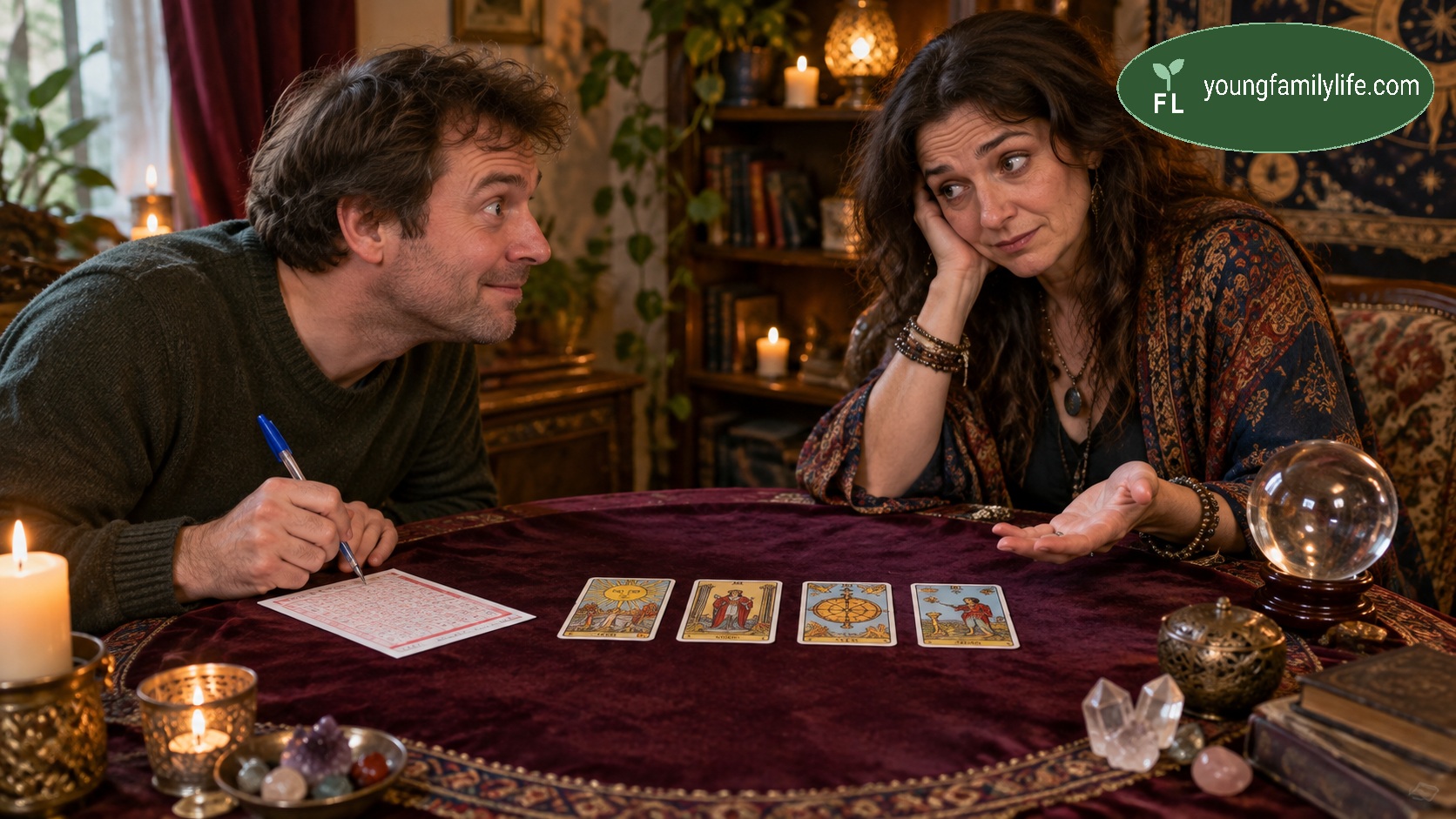
A Shared Birth
Astrology and astronomy are not old rivals. For most of human history they were not even two disciplines — they were one activity, practised by the same people, using the same instruments, recording the same data. The Babylonian priest-astronomers who tracked Venus across the night sky for three and a half thousand years were not doing two jobs. They were doing one: watching the sky closely enough to read it, for whatever purpose reading it might serve.
The oldest surviving planetary text in existence, the Venus tablet of Ammisaduqa, is simultaneously one of astronomy's founding documents and one of astrology's. It recorded the rising and setting of Venus not out of neutral scientific curiosity but because those movements were read as omens — signs of the god's intent for the king and the state. The Babylonians built a functional theory of planetary motion, the sexagesimal number system still used today for measuring angles and time, and, by the fourth century BCE, mathematical methods accurate enough to calculate future planetary positions in advance. All of this technical achievement was funded, motivated, and organised by the desire to divine the future. The astronomy was, in a very real sense, a by-product of the astrology.
This is worth sitting with, because the modern instinct is to treat astrology as astronomy's foolish cousin — a superstition that science eventually outgrew. The historical record says something more interesting: astronomy is what was left over once one particular use of sky-watching was stripped away from a much older, unified practice. The split was not a rescue. It was an amputation, and it took roughly two thousand years to complete.
Two Thousand Years of Not Quite Separating
Ancient Greek astronomers inherited the Babylonian data wholesale and kept the fusion intact. Ptolemy, working in the second century CE, produced two great works: the Almagest, a mathematical astronomy that would remain the working standard for over a thousand years, and the Tetrabiblos, a foundational astrological text that would remain equally influential for just as long. He did not treat these as contradictory projects. Predicting where a planet would be and predicting what its position meant were, to Ptolemy, two applications of the same body of knowledge.
The split that later generations assume was inevitable took until the Scientific Revolution to even begin, and even then it was neither clean nor quick. Johannes Kepler — the astronomer whose three laws of planetary motion underpin celestial mechanics to this day — was also a working astrologer who cast horoscopes for a living, because that was where the money was. Kepler was scathing about most of astrology: he agreed with critics that the zodiac signs were human inventions and that eclipses portended nothing. But he retained a belief that the geometric angles between planets — what astrologers call aspects — had a real influence on weather and personality. He wanted to reform astrology, not abandon it, and historians describe him as the last major figure to attempt to hold astronomy and astrology together as one coherent discipline.
It was not until roughly 1700 — after Newton, after the wider apparatus of empirical, falsifiable, causally-grounded science had matured — that astronomy fully separated and astrology was left behind as something else: not a rejected science, but a different kind of claim entirely.
One historian of science frames the split precisely: the Babylonians achieved genuine prediction of when celestial events would occur, but never achieved any working theory of what those events caused. Aristotle's later decision to treat the sublunar world (earthly, changeable, causally graspable) and the superlunar world (celestial, perfect, governed by different laws) as separate sciences did not solve this problem — it sidestepped it by dividing the subject in two. That division, intended to protect the coherence of each domain, is what allowed astrology to persist as a freestanding claim once astronomy moved on without it.
The story told so far is a Western one, and it is not the only split on record. Two other traditions drew their own lines between astronomy and astrology, centuries apart from each other and from Europe, for reasons that had little to do with scientific method and everything to do with what each institution considered a threat.
Islamic scholarship drew its line early, and drew it on theological rather than empirical grounds. From roughly the eighth century, Muslim scholars maintained an explicit distinction between ilm al-nujum — astronomy proper, used to fix prayer times, the direction of the qibla, and the Islamic calendar, and actively promoted for exactly those reasons — and ilm al-ahkam al-nujum, predictive astrology, which a number of the era's leading astronomers rejected on the same terms their religious scholars did. The objection was not that astrology lacked evidence; it was that the Quran assigns knowledge of the unseen exclusively to God, so a practice claiming to read the future in the stars was read as a rival claim to divine knowledge rather than a scientific error. Astronomers such as al-Biruni and Ibn Rushd, working at the height of the Islamic Golden Age, argued against astrology in precisely these terms while continuing to advance astronomy itself.
Catholic Europe drew a different line, later, and in a more complicated direction than either popular memory or a simple rehabilitation of the Church tends to assume. Astronomy as a general category was not merely tolerated but heavily patronised — Jesuit observatories accounted for roughly a quarter of all astronomical observatories on Earth by the late eighteenth century, several cathedrals were built and equipped as genuinely sophisticated solar observatories specifically to calculate the date of Easter, and the Gregorian calendar reform was itself a substantial Church-commissioned astronomical undertaking. But this patronage sat alongside a genuine willingness to punish the one specific claim that crossed into scripture: heliocentrism. Giordano Bruno was burned at the stake in 1600 holding Copernican views among a wider set of positions the Inquisition judged heretical — historians still dispute how much his cosmology actually weighed in that verdict against his separate, more clearly theological offences, but the case shows a Church willing to use its most severe penalty where doctrine felt threatened. Galileo fared better process-wise — he was threatened with torture under standard interrogation procedure but not tortured, and was never at risk of execution, spending his final years under comfortable house arrest after recanting in 1633 — but the substance of the ruling against him was the same instinct: silence the claim, not merely debate it. And the Church did not lead its way out of that position. The formal ban on teaching the Earth's motion as established fact was only informally eased in 1758, a full generation after the Enlightenment had already made heliocentrism uncontroversial among the educated public, and it was not fully lifted until the 1820s. On this specific question, the pattern is less "the Church embraced astronomy throughout" and more that it adapted to the Enlightenment's verdict once resisting it had become untenable, rather than helping to reach that verdict itself.
Set side by side, the three traditions suggest the same underlying pattern from three independent directions: what an institution suppresses is rarely a discipline. It is whichever specific claim collides with whatever that institution cannot afford to have contradicted — divine exclusivity over the future, in Islam's case; scriptural cosmology, in Catholic Europe's. Astronomy that served prayer, calendar-keeping, or Easter-dating was welcomed in both traditions, on both sides of the world, without hesitation. Only the one claim that threatened a specific doctrinal commitment was ever actually at risk.
This history matters for what follows, because it reframes the entire question. The interesting puzzle is not "why do people still believe something science disproved centuries ago." Astrology was never disproved in the way that phlogiston or geocentrism were disproved — it was set aside, when one branch of a shared inquiry adopted a method (prediction through testable, causal mechanism) that the other branch could never satisfy and, arguably, was never actually trying to satisfy in the first place. The real question is why so many people, in an age saturated with the astronomy that grew out of that split, still find the astrology more useful, more comforting, or more true-feeling than the discipline that replaced it.
What the Brain Was Built to Do With a Pattern
The first part of the answer sits in a well-established piece of evolutionary psychology called error management theory. Researchers Martie Haselton and David Nettle formalised the observation that, when a nervous system has to guess whether an ambiguous signal in the environment is meaningful or not, the two possible mistakes are not equally costly. A false positive — treating a rustle in the grass as a predator when it is only the wind — costs almost nothing. A false negative — dismissing the rustle as wind when it is in fact a predator — can cost a life. Over evolutionary time, this asymmetry pushes minds toward systematically over-detecting pattern and agency, because that is the cheaper mistake to keep making.
Psychologists call the resulting tendency hyperactive agent detection: a built-in bias toward assuming that ambiguous events have an intentional cause behind them, because the animals that assumed this and were wrong survived more often than the animals that assumed otherwise and were sometimes right. The same mechanism that makes a person jump at a shadow, or see a face in a scorch mark on toast, is the mechanism that makes a scattering of stars into a hunter, a bear, or a set of twins. Pattern-seeking of this kind — sometimes called apophenia when it produces connections that are not actually there — is not a design flaw. It is what a threat-averse brain does by default, and researchers researching openness and pattern-seeking traits have noted that the same tendency that produces excessive apophenia in some people also appears to confer real advantages in creative and inventive domains. The mind that sees a face in the clouds is running the same software as the mind that sees a solution nobody else has spotted yet.
Astrology asks nothing more of this apparatus than it already wants to do. A birth chart takes a genuinely ambiguous input — a life, a personality, a set of coincidences and choices — and offers a pattern to organise it. The pattern-seeking mind does not need to be persuaded to find that appealing; it needs to be persuaded not to, which is a much harder and much more recent cultural achievement than the pattern-seeking itself.
It is worth being precise about what the pattern-seeking mind is actually working with here, because the raw material is itself an illusion of a particular kind — not a false pattern imposed on nothing, but a false sense of togetherness imposed on stars that mostly have nothing to do with one another. A constellation is not a real grouping of nearby stars; it is an accident of perspective, produced by stars at wildly different actual distances from Earth happening to fall along the same line of sight when viewed from this one particular vantage point at this particular moment. The stars themselves are also in genuine, continuous motion through space, and always have been — that motion is simply too small, from this far away and over a human timescale, for the naked eye to register within a lifetime, or even across the two and a half thousand years since the oldest constellation myths were first told. Give it long enough and any given constellation's shape drifts and eventually dissolves entirely, not because the stars are doing anything unusual, but because the brief, coincidental alignment that made them look grouped in the first place stops holding. The pattern-seeking mind, in other words, is not just finding shapes in noise — it is finding relationship in objects that mostly share nothing but a fleeting, common line of sight from one small planet. That the mind does this so readily, and finds it so satisfying, is itself further evidence for how little a pattern needs to actually be real before it feels compelling.
The Fallacy of Personal Validation
The second mechanism is more specific, and considerably better documented, because it has been directly tested. In 1948, psychologist Bertram Forer gave a personality test to thirty-nine of his students. A week later he handed each of them what he told them was a personalised sketch of their character, generated from their answers, and asked them to rate its accuracy from naught to five. The average rating was 4.26. Almost nobody rated it below four.
Every student had received the identical sketch. Forer had assembled it, not from any test data, but from statements lifted wholesale out of a newsstand astrology book. Its accuracy had nothing to do with insight into any individual and everything to do with its construction: statements vague enough, and hedged enough — "at times you are extroverted and sociable, while at other times you are introverted and reserved" — that almost anyone could read themselves into them. Forer called the underlying error the fallacy of personal validation: the mistake of treating the feeling of recognition — yes, that's me — as evidence that an instrument has actually measured something real about the individual, when the feeling and the evidence are entirely separate things.
The finding, now generally known as the Barnum or Forer effect, has been reproduced with striking consistency across the following seven decades — rare enough, in a psychological literature much of which has not survived closer scrutiny, that it stands out as one of the field's genuinely durable results. It has since been shown to explain a meaningful share of belief not just in astrology but in personality tests, cold-reading psychics, and aura readings generally. Research into what strengthens the effect has found that people rate the description as more accurate when they believe it was generated specifically for them, when the description leans positive, and when they are given latitude to apply their own meaning to ambiguous statements — which describes, almost exactly, the structure of a standard newspaper horoscope.
This is not a claim that astrology's believers are unusually credulous. Forer's subjects were psychology students, mid-century, in a classroom setting, specifically told they were rating a scientific personality assessment. The effect did not require ignorance, gullibility, or a prior belief in the paranormal. It required only the standard operation of a mind doing what minds do with self-relevant, emotionally warm, ambiguously worded information: recognising itself in it.
Two Kinds of Knowing
There is a third, deeper layer beneath both of these mechanisms, and it concerns not what the brain does with pattern and personal relevance, but how it prefers to hold information at all.
The psychologist Jerome Bruner argued that human cognition works through two genuinely distinct and irreducible modes. The paradigmatic mode explains through category, logic, and testable proposition; its output is a claim that can, in principle, be checked against the world and found true or false. The narrative mode understands through story instead — agents, with intentions, encountering trouble, arriving at an outcome, ordered in time; its output is not truth in that sense but what Bruner called verisimilitude, a version of events that feels coherent and meaningful whether or not it is literally, checkably accurate. Neither mode is a lesser version of the other. They are simply built to do different jobs, and — critically for this essay — one of Bruner's central arguments was that Western scientific and educational culture has spent the last several centuries training and rewarding the paradigmatic mode almost exclusively, while the narrative mode continues operating underneath it, mostly unacknowledged, doing the actual work of making a person's life and identity feel coherent to them.
Astronomy speaks almost entirely in the paradigmatic mode. It describes a red giant's core collapse, a planet's orbital eccentricity, the redshift of a receding galaxy — testable claims about a universe that does not organise itself around, or in reference to, any individual life. Astrology speaks almost entirely in the narrative mode. It does not describe the universe; it tells the reader a story in which they are the central character, moving through a plot with recognisable turns — a difficult Mercury retrograde, a favourable transit, a period of change signalled by the movement of Saturn. One offers a fact about a place four hundred light years away. The other offers a chapter in a story about you.
This is not a modern accident. It may be closer to the oldest information technology humans possess. Researcher Lynne Kelly's study of oral cultures found that societies with no writing system encoded genuinely vast, accurate, cross-generational bodies of factual knowledge — the properties, seasons, and locations of hundreds of plant and animal species; complex kinship law; navigation across thousands of miles of landscape — inside songlines: sung narratives tied to specific places in the landscape, in which each location functioned as a kind of subheading holding a portion of the culture's accumulated knowledge. These were not decorative myths sitting alongside the real knowledge. They were the storage and retrieval system, precisely because the human brain evolved to remember a story — sequence, place, character, stakes — far more reliably than it remembers a list of decontextualised facts.
The same pattern shows up independently in a domain where the stakes for getting it wrong were about as high as they come: open-ocean navigation. Traditional Polynesian wayfinders crossing the Pacific built what researchers call a star compass, memorising the rising and setting points of a very large number of stars across dozens of named horizon positions for a single long voyage, and used it to reach islands invisible below the horizon with a degree of accuracy that puzzled and then impressed the European navigators who first documented it. Crucially, the stars involved were not memorised as an abstract list of bearings. They were named, storified, and populated with figures and events — Māui's Fish Hook, the Canoe of Tamarereti, the star cluster Matariki marking the turn of the year — precisely so a body of positional knowledge large enough to risk a crew's life on could be held in memory and taught to the next generation without ever being written down. A different, independent tradition arrived at a related but distinct solution: Arab navigators crossing the Indian Ocean fixed star positions in memory using rhythm and verse rather than character and plot, showing that narrative structure is not the only mnemonic route available, only the one most cultures seem to have reached for first.
Read against that backdrop, the earliest astronomy was never actually paradigmatic at all. The constellations are not neutral scientific labels; they are mnemonic devices — a hunter, a bear, a set of twins, a crab — precisely so that the actual astronomical information could be held in memory by a culture with no writing system, whether the use was tracking the seasons or finding a way home across open water. Astrology's stories about the sky and astronomy's data about the sky may, in the deepest sense, be the same inheritance: a narrative scaffold built to carry factual content that the paradigmatic mode alone could never have retained across generations. What later centuries split into two disciplines may always have been, underneath, a single cognitive strategy — and the astrology is not a corruption of that strategy but arguably its more faithful continuation, still doing the job stories have always done, while astronomy went on to do something else entirely: describing a universe that no longer needs to be remembered by heart, because it is written down.
What the Numbers Actually Show
None of this means most people, in a country with universal literacy and compulsory science education, straightforwardly believe astrology in the way they believe astronomy. The evidence on this point is more interesting, and more precise, than the popular picture of widespread credulity.
A YouGov survey of the British public, fielded in 2015, found that only eight per cent think horoscopes can genuinely predict the future — compared with fourteen per cent in the United States — and eighty-two per cent of Britons gave a firm no. That is a low rate of belief in astrology's predictive claim, specifically.
But a separate, earlier and more detailed YouGov survey — a representative sample of 2,090 British adults, fielded in October 2010 — found something that complicates a simple "the British don't believe in this" reading. Unprompted, only two per cent of respondents did not know their own star sign — a strikingly high level of astrological literacy for something so widely dismissed. Of those asked directly, forty-one per cent said the standard personality description for their star sign fairly summed up their own character, and exactly the same proportion took the opposing view. Most tellingly, the same survey ran Forer's experiment again, sixty-one years on: it showed every respondent an identical personality profile and horoscope prediction, telling each of them it was drawn specifically from their own star sign. Thirty-nine per cent said the personality profile matched them; thirteen per cent said the prediction was accurate.
Put these two findings together and a clear pattern appears. Belief in astrology as a predictive mechanism is low and has likely never been the main draw. Recognition of the self in a vague, warmly worded personal description — the Barnum effect operating exactly as Forer's original experiment showed it would — is far higher, runs across a huge cross-section of otherwise sceptical people, and does not require the reader to think the stars are doing anything at all. Most people engaging with astrology are not making an epistemic claim about celestial mechanics. They are doing something closer to reading a piece of narrative fiction about themselves, and finding, as fiction often intends, that they recognise something true-feeling inside it.
The Trade the Story Makes
This is the point at which the two disciplines' different relationships with the individual become impossible to ignore, because it is very plausibly the actual source of astrology's appeal.
Astronomy's account of the universe is, by any ordinary human measure, indifferent. A star does not know it is being watched. A galaxy does not organise its structure around the birth of any particular person on a small planet orbiting one ordinary star among hundreds of billions. This is not a flaw in astronomy — it is precisely what makes it trustworthy, because a science that adjusted its findings to flatter or comfort the observer would no longer be describing anything real. But it does mean that astronomy, however awe-inspiring, offers almost nothing in the way of personal narrative agency. It cannot tell a person why a difficult year happened to them, or what it meant, or what is coming next for them specifically. It was never built to.
Astrology's account of the sky does the opposite, on every count. The chart is drawn for a specific date, time, and place of birth. The story is explicitly and exclusively about the reader. The universe it describes is not indifferent; it is, in a very literal sense, watching, and its movements are relevant to the plot of an individual life. This is not a modest claim, and it is not one that survives careful testing of its causal mechanism. But it answers a psychological need that indifferent, accurate information structurally cannot: a restored sense that events happen to someone, for reasons, inside a story with a shape.
Framed this way, astrology's persistence looks less like a failure to grasp what astronomy has established, and more like a trade that a great many people make with their eyes at least partly open: giving up predictive accuracy in exchange for narrative coherence and a restored sense of personal relevance in an otherwise indifferent universe. The polling evidence above suggests most people making this trade know, on some level, exactly what they are doing — reading their horoscope, recognising themselves in it, and not actually reorganising their week around what Mercury is doing.
What the Mind Was Built to Do
None of the mechanisms described here are unique to astrology, and that is arguably the more useful takeaway. Hyperactive pattern and agency detection, the pull of a personally-flattering vague description, and the mind's structural preference for story over abstraction are all still fully active in a reader who has never opened a horoscope column in their life. They show up in algorithmic "recommended for you" content, in personality tests marketed as scientific, in conspiracy theories that offer narrative coherence where the true explanation is genuinely, unsatisfyingly diffuse, and in any number of everyday judgements where a compelling story outcompetes an accurate but indifferent fact.
Astrology simply makes the mechanism unusually visible, because it sits directly on top of a science — astronomy — that grew out of the same root and now offers, on the same subject matter, the clearest possible contrast between what a fluent, personally-relevant story delivers and what a demanding, indifferent truth delivers instead. The irrational, in this light, is not a failure of the individual mind. It is that mind doing precisely what it evolved to do, in a domain that one branch of human inquiry has since moved beyond, while the older need the story was always serving — to make experience feel patterned, personal, and meaningful — never went away, and was never going to be answered by more accurate information alone.
References
Al-Quran and Water Science. (n.d.). The stars and the soul: Astrology, astronomy, and spirituality in Islamic tradition.
Astronoo. (n.d.). Babylonian astronomy and astrology: History and contributions.
Atticus Li. (2026). The Barnum/Forer Effect, Replication Crisis Hub (secondary summary of Forer, 1949, consulted for the classroom-experiment account).
Aveni, A. (n.d.). Cited in NYU Shanghai Writing Program, Polynesian Star Stories: Unifying the Scattered Islands of the Pacific.
Barrett, J. L. (2000). Exploring the natural foundations of religion. Trends in Cognitive Sciences, 4(1), 29–34.
Barrett, J. L. (2004). Why would anyone believe in God? AltaMira Press.
Bruner, J. (1986). Actual minds, possible worlds. Harvard University Press.
Bruner, J. (1990). Acts of meaning. Harvard University Press.
Catholic Education Resource Center. (2003, March 4). The sun in the church (on Jesuit solar observatories and cathedral meridian lines).
Dickson, D. H., & Kelly, I. W. (1985). The 'Barnum effect' in personality assessment: A review of the literature. Psychological Reports, 57(2), 367–382.
Early Astronomy Project, University of Michigan. (n.d.). Babylonian and Greek astronomy.
EBSCO Research Starters. (n.d.). Astronomy and censorship (on the Galileo affair and the Index of Prohibited Books).
Field, C. D. (2010, October 14). Who believes in horoscopes? British Religion in Numbers, reporting a YouGov survey of 2,090 British adults fielded 10–11 October 2010.
Forer, B. R. (1949). The fallacy of personal validation: A classroom demonstration of gullibility. Journal of Abnormal and Social Psychology, 44(1), 118–123.
Haselton, M. G., & Nettle, D. (2006). The paranoid optimist: An integrative evolutionary model of cognitive biases. Personality and Social Psychology Review, 10(1), 47–66.
Islam and Astrology. (n.d.). Wikipedia (consulted for the ilm al-nujum/ilm al-ahkam al-nujum distinction in Islamic scholarship).
Kelly, H. (2017). Galileo's Non-Trial (1616), Pre-Trial (1632–1633), and Trial (May 10, 1633): A Review of Procedure, Featuring Routine Violations of the Forum of Conscience. Church History, 85(4). Cambridge University Press.
Kelly, L. (2016). The Memory Code. Allen & Unwin.
Lewis, D. (1972). We, the Navigators: The Ancient Art of Landfinding in the Pacific. University of Hawaii Press.
Society of Catholic Scientists. (2023, April 5). Hasn't the Catholic Church historically been opposed to science? (on Jesuit astronomical observatories and the Vatican Observatory).
Stanford Encyclopedia of Philosophy. (n.d.). Giordano Bruno (consulted for the balance of theological versus cosmological charges at Bruno's 1600 trial, and the historiographical dispute over their relative weight).
University of Victoria Astronomy Department. (n.d.). Course notes, Astro P303, Module 1 (consulted for Arab Indian Ocean navigators' verse-based star memorisation).
Vatican Observatory. (2025, October 21). The Church repressing science (supposedly)... again (on the Galileo affair alongside the Church's continuous astronomical patronage).
YouGov. (2015, July 3). 8% of Britons believe horoscopes can predict the future.
Zarka, P. (2011). Astronomy and astrology. In D. Valls-Gabaud & A. Boksenberg (Eds.), The Role of Astronomy in Society and Culture, Proceedings of IAU Symposium No. 260. Cambridge University Press.
Encyclopedia articles and academic summaries consulted for the astrology–astronomy historical split: Fiveable (Intro to Astronomy course notes), Kerykeion (A Brief History of Astrology), and an arXiv history-of-science paper on the Babylonian and Aristotelian origins of the astrology/astronomy division.
Additional secondary summaries of the Forer/Barnum literature consulted: Nesslabs (The Barnum Effect: why we love astrology and personality tests); PMC (Apophenia as the Disposition to False Positives: A Unifying Framework for Openness and Psychoticism, 2020); Owlcation (Pareidolia and Apophenia Explained).
Secondary summaries of Bruner's narrative/paradigmatic distinction consulted: SimplyPsychology (Jerome Bruner Theory of Cognitive Development); The Marginalian (The Psychology of What Makes a Great Story).
Secondary summaries of songline/oral-tradition memory research consulted: The Conversation (The Memory Code: how oral cultures memorise so much information); Psychotherapy and Counselling Journal of Australia (Contributions from Aboriginal Australian Psychology: Songlines, Memory, and Relational Knowledge Systems); Museum Whisperings (Exploring Songlines and Cultural Memory).
Note: per standing YFL convention, external hotlinks have been stripped from this list. Each entry gives sufficient detail for independent verification.
Topics: #Astrology #Astronomy #Psychology #BarnumEffect #CriticalThinking #NarrativeAndPractice #IndependentEnquiry