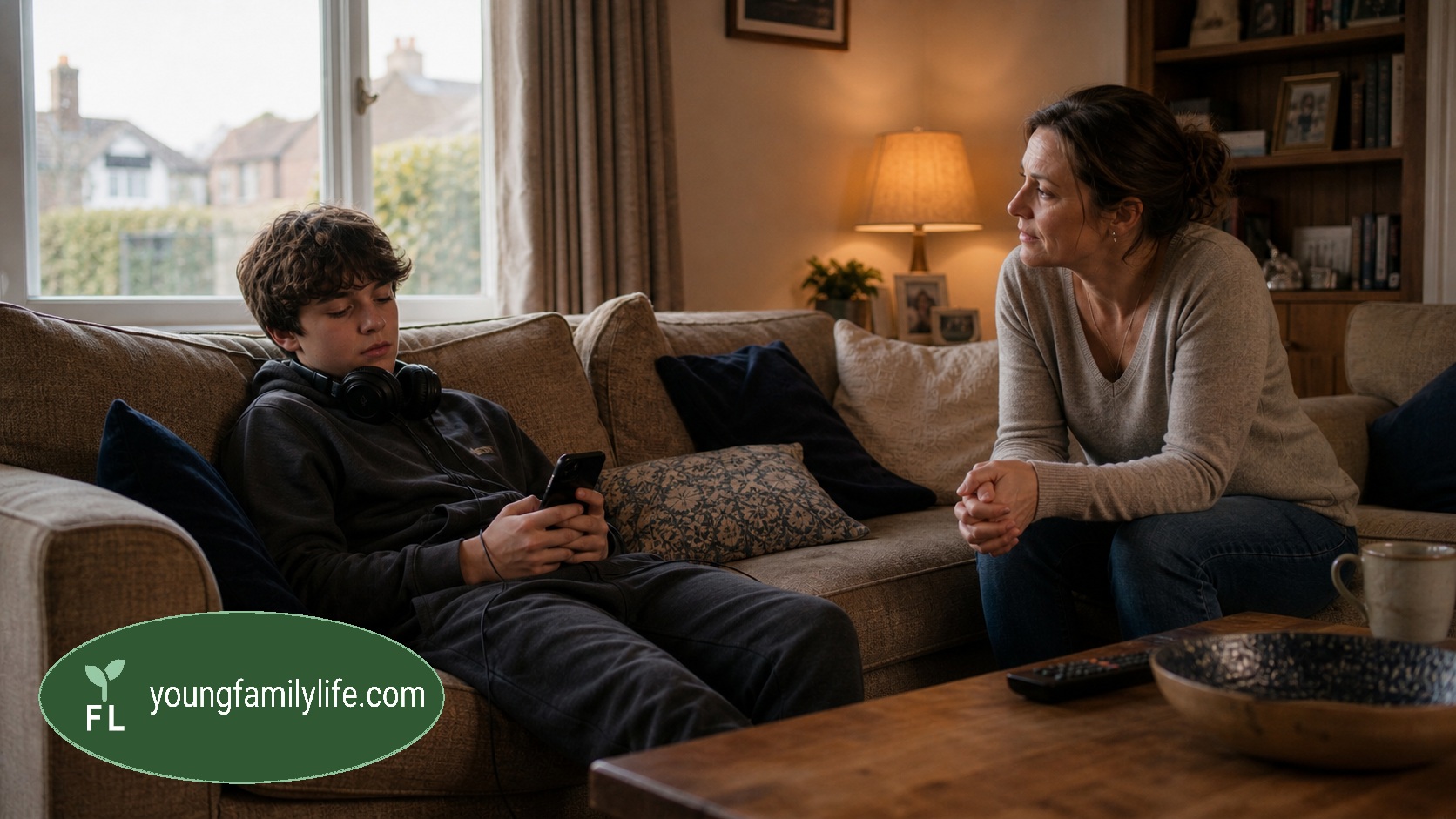
The feeling is real — and it is older than the situation
When a child ignores a parent — when a teenager performs indifference at the dinner table, or a young child says "yeah" and still doesn't come — the feeling the adult is left with is real. It is not an overreaction. It is not a sign that something is wrong with the parent.
What research in social neuroscience has found is that being ignored or excluded activates the same neural pathways in the brain as physical pain. Matthew Lieberman at UCLA, whose work on the social brain is among the most cited in the field, describes how the brain's pain system evolved not just to respond to physical injury, but to social disconnection — because for a species that depends on group belonging for survival, being cut off from others was just as dangerous as being physically harmed. The sting of being ignored is not metaphorical. It is neurological.
This means that the adult who feels hurt when a child doesn't respond, or when a teenager dismisses a warmly intended question, is not being oversensitive. They are experiencing exactly what the brain is designed to produce when it registers social disconnection from someone who matters.
Why it can feel bigger than the moment
Most of the time, a child ignoring a parent is a small thing. The behaviour itself — a "yeah" without looking up, a monosyllabic response, a teenager who barely acknowledges a parent's presence — is not objectively significant.
But for some people, in some moments, it lands with considerably more force than the moment seems to warrant. This is where attachment research has something useful to say.
The psychologist John Bowlby, working from the 1950s onward, developed the idea of the internal working model — the set of expectations and beliefs about relationships that people build in early childhood based on whether the people who cared for them were reliably available and responsive. These models don't stay in childhood. They travel with the person into adulthood — and into parenthood — shaping how moments of connection and disconnection are experienced and interpreted.
A parent whose own early experience of being seen, welcomed, or noticed was reliable will tend to read a child's momentary indifference without too much charge attached. A parent for whom early experiences of being overlooked were more common — or whose own parents were unpredictable, distracted, or unavailable — may bring those older experiences to the moment without being aware of it. The child's perfectly ordinary behaviour lands through a lens built from history.
This is what the psychologist Peter Fonagy's research on reflective functioning describes: the capacity to see a child's behaviour as behaviour — as something the child is doing, for developmental reasons — rather than as a signal about the relationship, or about the parent's own worth. Parents with higher reflective functioning are better able to hold their own emotional response steady while also understanding the child's experience. Those for whom the child's indifference feels more personal may be, in part, experiencing something older than the current moment.
It is not only a parenting experience
The experience of being ignored — by a child, by a partner, by a colleague, by anyone significant — draws on the same system. The social pain response doesn't operate only in the parent-child relationship. It is part of the general human experience of needing to matter to the people who matter.
What the parent-child relationship does is intensify this, for two reasons. The investment is unusually high. And there is an unspoken expectation — rarely examined — that a parent should not need a child's acknowledgement; that to feel the sting is somehow to reveal a need that adults should have outgrown.
The research suggests otherwise. The need to be seen by people who are important does not diminish with age. It simply becomes less acceptable to admit.
What it usually isn't
There is a tendency, when the sting of being ignored is felt, to read the child's behaviour as a verdict on the relationship — or on the parent. The child who doesn't come when called is choosing not to. The teenager who rolls their eyes at the family gathering is demonstrating how little the parent means to them.
The research on child development consistently challenges both readings. Children's non-compliance in younger years is, in the great majority of cases, a function of an immature prefrontal cortex — the part of the brain responsible for switching attention and initiating action — not a decision. Teenagers' social withdrawal from parents is driven by neurological changes of puberty, not by a considered assessment of the relationship.
The child or teenager who ignores is almost never making a statement about the parent's value to them. The full essay — Children Who Ignore or Show No Care for Their Parents — covers the developmental and attachment science in detail. What this piece is concerned with is the adult's experience of that moment: the sting, where it comes from, and what it is actually evidence of.
The answer, most of the time, is not what the moment suggests. The sting is real. Its source is old. And the child is probably not the cause of it.
Topics: #InOtherWords #SocialPain #InternalWorkingModel #AttachmentHistory #ReflectiveFunctioning #Bowlby #Fonagy #Lieberman #ParentingScience #FamilyLife #YoungFamilyLife #InformationWithoutInstruction
Related YFL Content
In Other Words: what three significant hormones in adolescence are doing at the front door — the companion IOW: what cortisol, oxytocin, and dopamine are doing in the teenager's body and in the parent's — the chemistry that underlies the moment this piece describes
Hey!, Want To Know: why your teenager can reject closeness? And it looks like disrespect — the adolescent brain, individuation, and the public performance of indifference: what is actually driving the behaviour that produces the sting
Hey!, Want To Know: why your child can be so moody after school? — why the child the school describes and the child the parent receives are two parts of the same story, and what the secure base has to do with it
The Borrowed Self — the YFL essay on the human need to belong, to be seen, and what happens when those needs go unmet — the deeper frame for the social pain this piece describes
Copyright Notice
© 2026 Steve Young and YoungFamilyLife Ltd. All rights reserved.
All original content on YoungFamilyLife — including essays, articles, frameworks, and other written material — is the intellectual property of Steve Young and YoungFamilyLife Ltd, unless credited to another source. Content is developed collaboratively using AI assistance to research sources and refine structure, while all intellectual authorship, original insight, and professional expertise remain those of the author.
No part of this website may be reproduced, distributed, or transmitted in any form without prior written permission, except brief quotations for noncommercial use.
For permission requests, contact: info@youngfamilylife.com