What a referral actually is
A referral to children's services is a scary moment for most families. It often arrives with no warning — a phone call, a letter, or a visit. It can feel like a judgement has already been made.
This piece explains what a referral is, why it happens, and what tends to happen next.
A referral is a request for children's services to look into a family's situation. It is not a decision. It is not an accusation. It is not the start of a court case.
Referrals can come from almost anyone: a school, a GP or health visitor, a relative, a friend or neighbour, or a member of the public — even a child. Parents sometimes refer themselves, because they want help before things get harder — some do this because they had a social worker themselves as a child, and know what that support can look like.
A child can also seek help themselves, which ends up reaching children's services — about their own situation, a brother or sister, or a friend. This often happens through Childline or the NSPCC helpline, which are built specifically for children to talk to someone in confidence.
Sometimes it's less direct than that. A child might be worried about a parent, or about a big problem at home — money, arguments, a parent's health — and simply seek out a chat with a trusted member of staff at school, rather than picking up the phone themselves. That conversation can be the thing that leads to a referral. This isn't usually about the child being unsafe. It's often a sign the child is coping well enough to reach out, while the parent or the family as a whole could do with some support.
The common thread across all of this is concern, not blame. Most referrals happen because someone wants to help before a small problem grows into a bigger one — not because a family has done something wrong.
Why professionals get involved
When teachers, GPs, or health visitors raise a concern, they're not acting alone or on personal judgement. They work within rules that say children's welfare comes first, and that different services — schools, health, police, social care — should share information and work together when a child might be at risk.
There's one specific exception worth naming: if a professional discovers that female genital mutilation has happened to a girl under 18, they must report it to the police by law. Outside of that, most professionals won't be breaking any law if they don't refer — but they're expected to speak up when they're worried.
What happens after a referral
A social worker will usually look into the information first. This means:
- Gathering information — talking to whoever raised the concern, and often to others already involved with the family, like a school or health visitor.
- Deciding what's needed — many referrals end with “no further action,” a chat, or some advice. Others lead to a period of assessment.
- Contacting the family — if more is needed, a social worker will get in touch, explain why, and talk through next steps.
- An assessment, if needed — the social worker meets the family, usually including the children, to understand what's going well and what might help.
Most families who are referred never go beyond this stage. An assessment leading to formal action is rare.
Behind the phone call
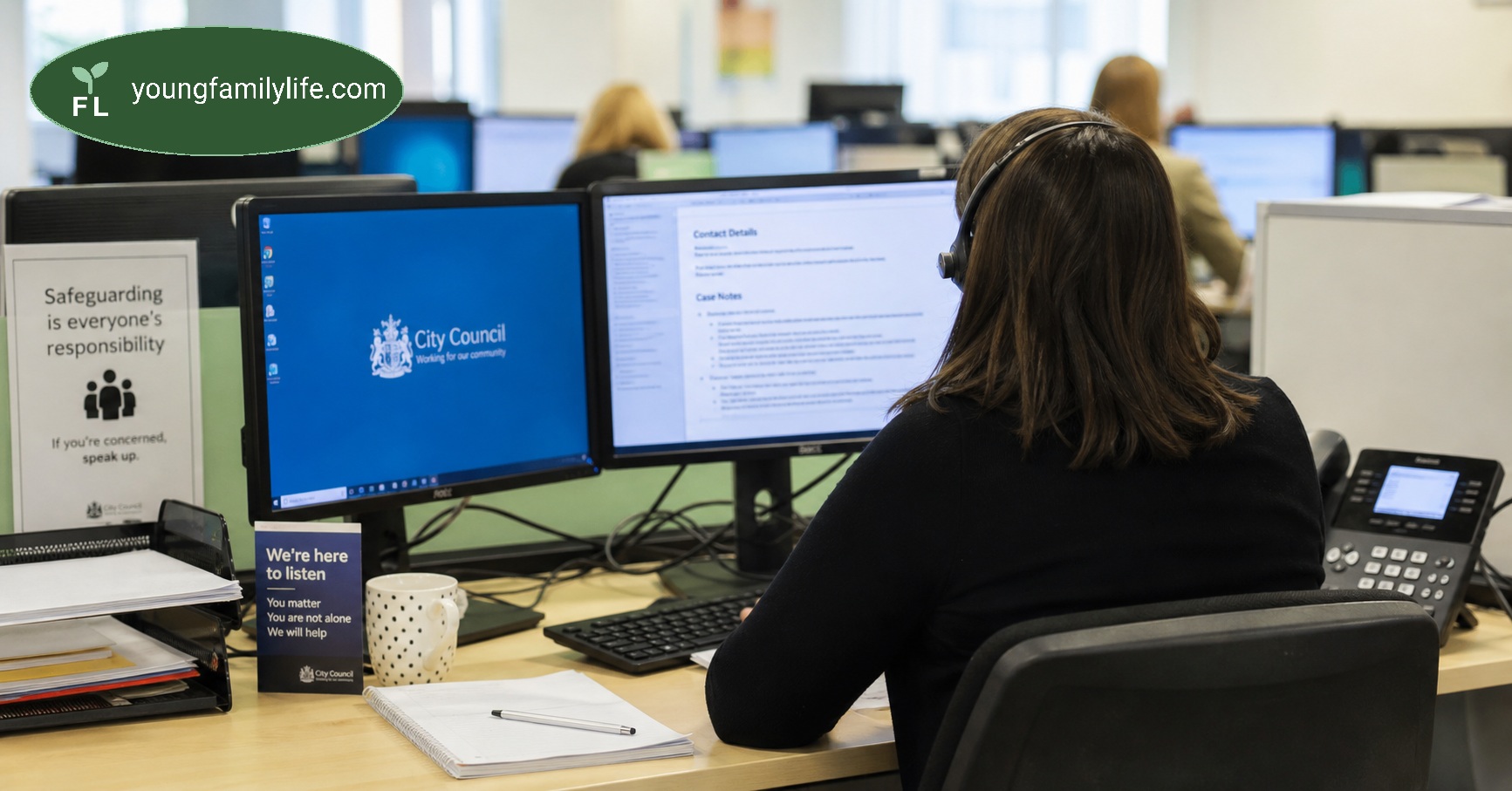
Every local authority has a “front door” team that takes calls about children. In Norfolk it's called CADS (Children's Advice and Duty Service). Elsewhere it might be called a MASH, First Response, or Duty and Assessment Team. The name changes; the job is the same.
Who answers. A qualified social worker, or an experienced duty officer working alongside one — not an untrained call handler. Many teams also have police and health staff sitting alongside them, so information can be checked quickly.
What they ask. Whoever calls — a teacher, a relative, or a parent — will usually be asked similar questions: what's the concern, and what's been seen or said? Is the child safe right now? How old is the child, and are there other children at home? Is anyone else already involved? What does the caller want to happen?
Underneath all of it sits one question: is a child being harmed, or likely to be harmed, right now? That's what shapes everything that follows.
How it's recorded. The call is written up and kept on file, even if nothing further happens. This means if a similar worry comes up later, it can be seen alongside what's already known, rather than starting from zero each time.
What happens next. A duty social worker or manager reviews the call, often the same day. The outcome usually falls into one of these:
- No further action. The concern doesn't need a service response — often because the child is already safe and well cared for.
- Information and advice. The family, or the person who called, is given guidance or pointed to local support. No case is opened.
- Early help. Support offered before things escalate, usually from a different team than social work.
- Child in need assessment. A closer look at what support the family needs.
- Child protection enquiry. The most serious path, used when there's real cause to think a child is being harmed. Still a small minority of all calls.
Most calls end at the first two stages. A phone call doesn't automatically become a case file, and a case file doesn't automatically become a child protection enquiry.
What parents can expect
A good social worker will be honest about why they're involved, what worries them, and what they need to see change. Parents can ask questions, ask for things to be explained plainly, and ask who to contact if unsure.
Staying open with a social worker, even when it's uncomfortable, usually makes the process shorter and less stressful than avoiding contact.
The bigger picture
Children's services exist to help families stay together and do well, wherever that's possible. Removing a child from their family is rare, and only happens when there's no other way to keep them safe — and always through a court.
Sadly, in a very small number of cases, a child needs to be moved to safety straight away, without time to wait for a court hearing. Where this happens, it's usually the police who act first, using their power to take a child into police protection for up to 72 hours while things are sorted out. A social worker and the courts then take over from there, and a family's right to challenge what's happening is protected throughout.
For most families, a referral is the start of a conversation about support.
Topics: #InOtherWords #ChildrensServices #Safeguarding #Referrals #Parenting #ChildProtection #SocialWork #EarlyHelp #ChildInNeed #FamilySupport #Childline #NSPCC #KeepingChildrenSafe
Related YFL Content
The Epistemology of Safeguarding — how professionals actually know what they know in child protection, from first observation to the most serious decisions.
Family Climate — the Warmth and Governance framework social care practice actually uses to think about a child's world.
Hey!, Want To Know: Why Caring Parents Get Short Tempered With Their Children — reassurance for parents who feel judged for an ordinary hard day.
Hey!, Want To Know: Why Do Household Rules Matter? — what consistency actually builds, and why repair matters as much as the rule itself.
In Other Words... What is Meant by “Parenting Style” — the warmth and structure behind how a parent responds to their child, day to day.