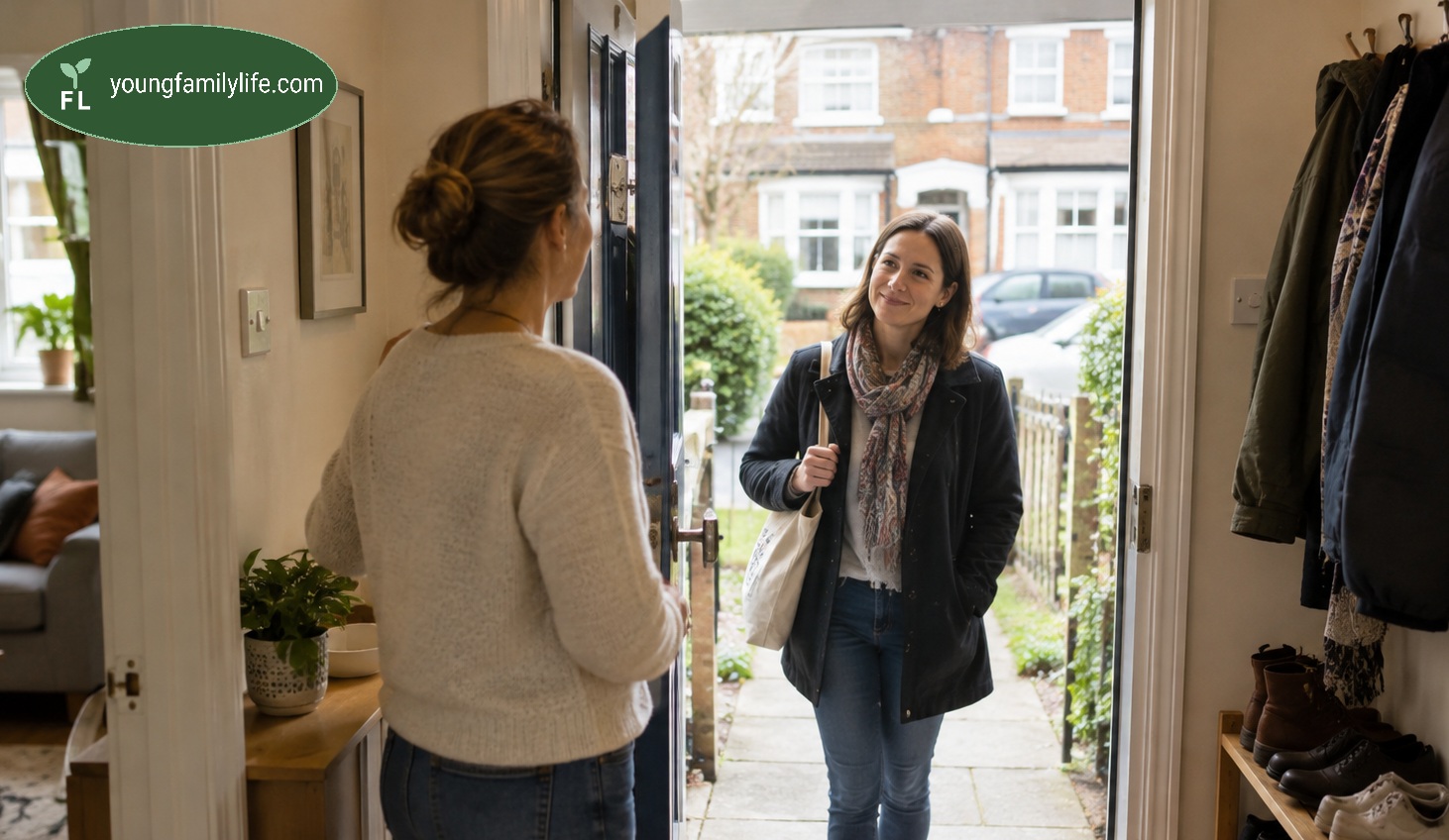
When Someone From "Children's Services" Gets Involved
Families have noticed something in the last few years: when children's services get involved for support, it's often not a qualified social worker who turns up to visit or carry out the assessment. This isn't a mistake, and it isn't something being hidden from families — it's a real change in how the system works, and it's worth understanding, because knowing who is actually involved changes how a family can work with them.
Over the last few years, England has changed a lot of the detail behind the scenes in how a concern about a child gets handled. If a school, a health visitor, a neighbour, or anyone else raises a concern, it goes to what's called the "front door" — a team that decides what happens next. If the concern is serious enough that a child might be at risk of real harm, a qualified social worker still leads that piece of work. But a great deal of the support work that sits just below that level — help with a struggling situation at home, contact after an early concern, ongoing visits and check-ins — is now often led by someone called a Family Help worker, who may not hold a social work qualification at all.
This Isn't Automatically a Bad Thing
It's easy to hear "not a qualified social worker" and assume that's worse. It often isn't. A Family Help worker's caseload and length of involvement tend to look much like a social worker's own — allocated for as long as a plan is open, and stepped back when things improve and the case closes. Neither role has any special claim to knowing a family longer or better than the other. What actually matters for either role is the same thing: building genuine rapport with a family, in a way that helps that family address the concerns that brought services in. Many Family Help workers are warm, capable, and good at exactly that. The change isn't really about whether they're good at what they do.
A useful comparison is seeing a nurse rather than a doctor at a health centre. Most appointments are handled well by whoever is the right fit for what's actually needed, and the system is meant to work so that a case moves up to more specialist attention if and when that turns out to be necessary — not as a failure of the first appointment, but as the system doing what it's designed to do. Whether that escalation happens as reliably in a safeguarding case as it does at a health centre is a fair question, and it depends heavily on the point that follows.
What's changed is something more procedural: who is trained, specifically, to hold uncertainty about a family's situation without jumping to the easiest explanation, and who carries formal, independent accountability if a judgement about a family turns out to be wrong. Noticing that a case needs to move up to a qualified social worker is itself part of that trained skill — which is exactly why the training gap matters here, not just as an abstract fairness point. A qualified social worker spends years training in exactly that skill and answers to an independent regulator on top of their employer. A Family Help worker's training is usually much shorter and more procedural, and if something goes wrong, the only accountability is internal to the council — there is no independent body a family can appeal to about them specifically, the way there is for a registered social worker.
A Real Imbalance, With or Without a Qualification
Researchers who study how parents experience these assessments consistently find the same thing: trust and a sense of being treated as a partner, not a suspect, make an enormous difference to how families engage with the process — and a real, asymmetric power sits underneath every one of these conversations, no matter who is holding it. A worker's job title doesn't remove that imbalance, and knowing the title doesn't either. What it does offer is a clearer picture of what role that person actually holds, and where the line of oversight above them sits.
Family Rights Group — a long-running charity that exists specifically to support parents and kinship carers through this system — has raised a related concern from a different angle: that splitting "expert" cases from "everyday" ones can accidentally damage the very trust and continuity that helps families most, by moving a family to a different worker with a different title at the exact point a relationship had been built with the one they had. It's a genuine tension, and it cuts against a simple "always insist on the most qualified person" instinct — continuity sometimes matters more than a title.
What This Doesn't Mean
It doesn't mean the person carrying out a visit or assessment is out of their depth. Most people doing this work, at every level, are trying to do right by the families they work with. It also doesn't mean a qualification guarantees a good outcome, or that its absence guarantees a bad one — plenty of experienced practitioners in this system hold neither a degree nor the word "social worker" in their job title.
What it does mean is that the system asking questions of families has quietly changed shape in the last few years, in ways most families are never told about directly. That's simply useful information to have, on its own terms — not a reason for concern, and not a reason for reassurance either, just a clearer picture of who is actually in the room and what that does and doesn't guarantee.
Topics: #InOtherWords #Safeguarding #ParentsRights #FamilyHelp #ChildProtection #ParentAdvocacy
Related YFL Content
What the UK Doesn't Know About the Cost of Keeping Children Safe — the companion piece on the safety and wellbeing of the staff on the other side of these same conversations.
The Epistemology of Safeguarding — a deeper look at the specific, trained skill of reading an uncertain family situation without jumping to a first impression.
When Personal Conviction Meets Professional Neutrality in Social Care — on how professionals are trained to separate personal judgement from professional assessment.
The Map Is a Question: What Ecomaps and Genograms Actually Reveal — a look at one of the actual tools a trained assessment might use, for families curious what a "proper" assessment involves.