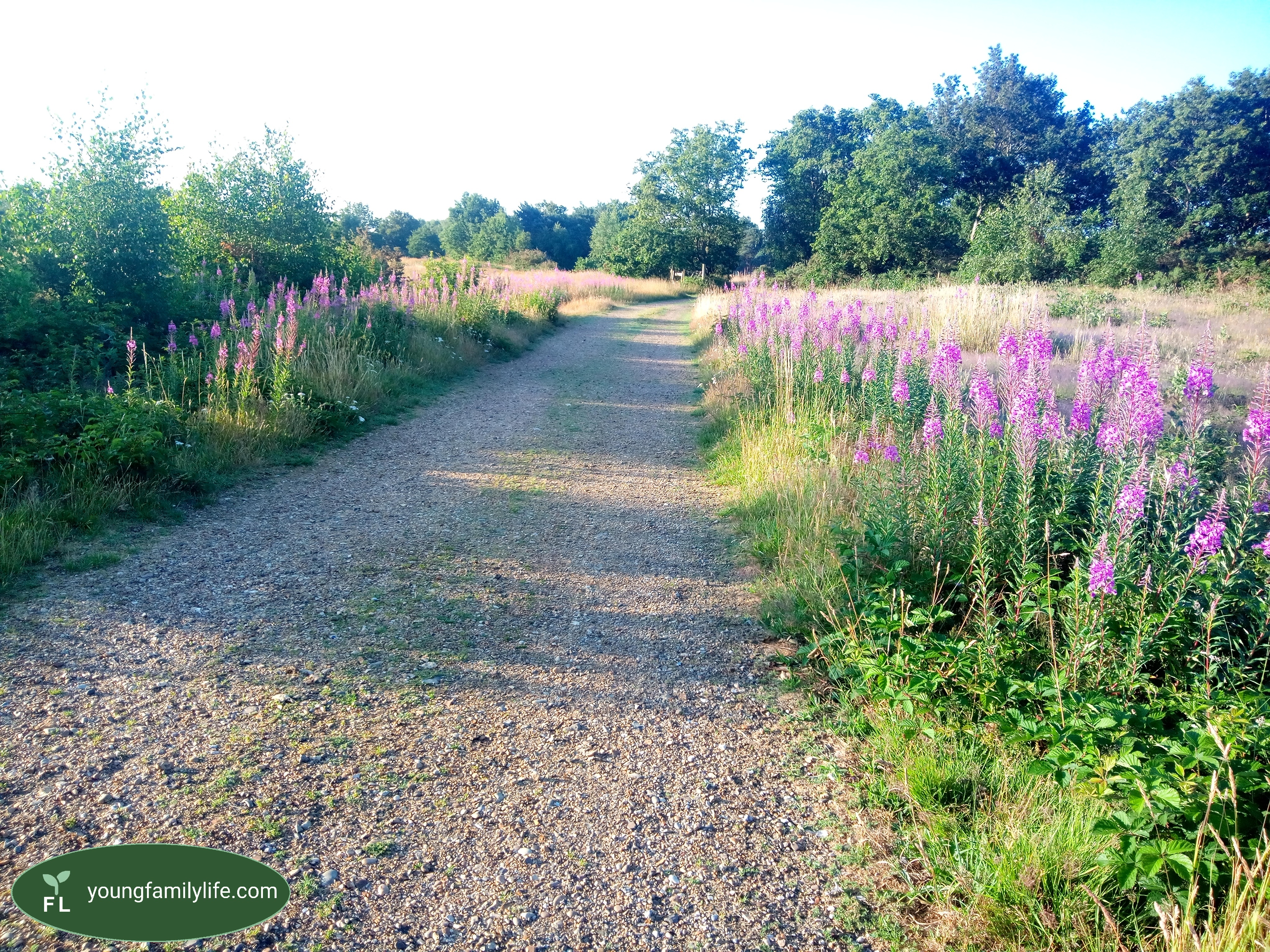
Who I Am, and Who I'm Not
A quick word on who I am, and just as importantly, who I'm not. I'm not one of the Common's owners, and I have no role in or authority to speak for how it's managed. I'm simply a Bungay resident, here since 2011, who counts himself lucky to live within yards of this place — not a botanist, biologist, or expert in anything scientific, just someone who enjoys learning about the world around me, with a bit of AI-assisted research to help keep things accurate.
That interest goes back a long way, though. As a child growing up in Rainham, Kent, in the 1960s and 70s, I had a particular fascination with amphibians and reptiles — newts especially, and slow worms. A number of the old abandoned chalk pits near Rainham held ponds with colonies of great crested newts, genuinely beautiful creatures to see during the mating season. I gather the proper word for that interest is herpetology — and I definitely was calling it that at the time, precocious child that I was. Television was good but limited in those days, there were no game machines or internet, so books and whatever I could find in the world around me were where most of my general knowledge came from — a habit that's never really left me.
That curiosity never really went away — it just found other outlets. These days it's channelled into YoungFamilyLife, a business I've been building as a free, evidence-based information resource on family life, child development, and the psychology behind them: from parenting and safeguarding to education and the everyday challenges families face. It's grown into a fairly substantial library over the past year. This Common Blog is a new addition to that — a more personal, local strand sitting alongside the main site, for the place I actually live rather than the wider subjects I usually write about.
Observations from Late Spring and Summer
A Cuckoo in the Valley — Late May into June
Following the rain that broke the early heatwave at the end of May, the grass and vegetation across the Common turned properly lush and green through the first weeks of June. It was during this spell that I kept hearing a cuckoo calling somewhere along the Waveney valley — that unmistakable two-note call — for what felt like several weeks, into late June.
I can't say which bird it was, or where it had come from; I'm certainly not going to claim it was one of the individuals tracked by the BTO's Cuckoo Tracking Project, since the nearest tagged bird that year was over in Thetford Forest, a good distance from Bungay. But the timing fits what's generally known about cuckoo behaviour: the BTO's tracking data shows most UK cuckoos start leaving their breeding areas by mid-June, so a bird still calling in the valley into late June wouldn't be unusual — if anything, it suggests ours may have lingered a little later than most.
This August's Heat — and Why I'm Not Calling It a Drought
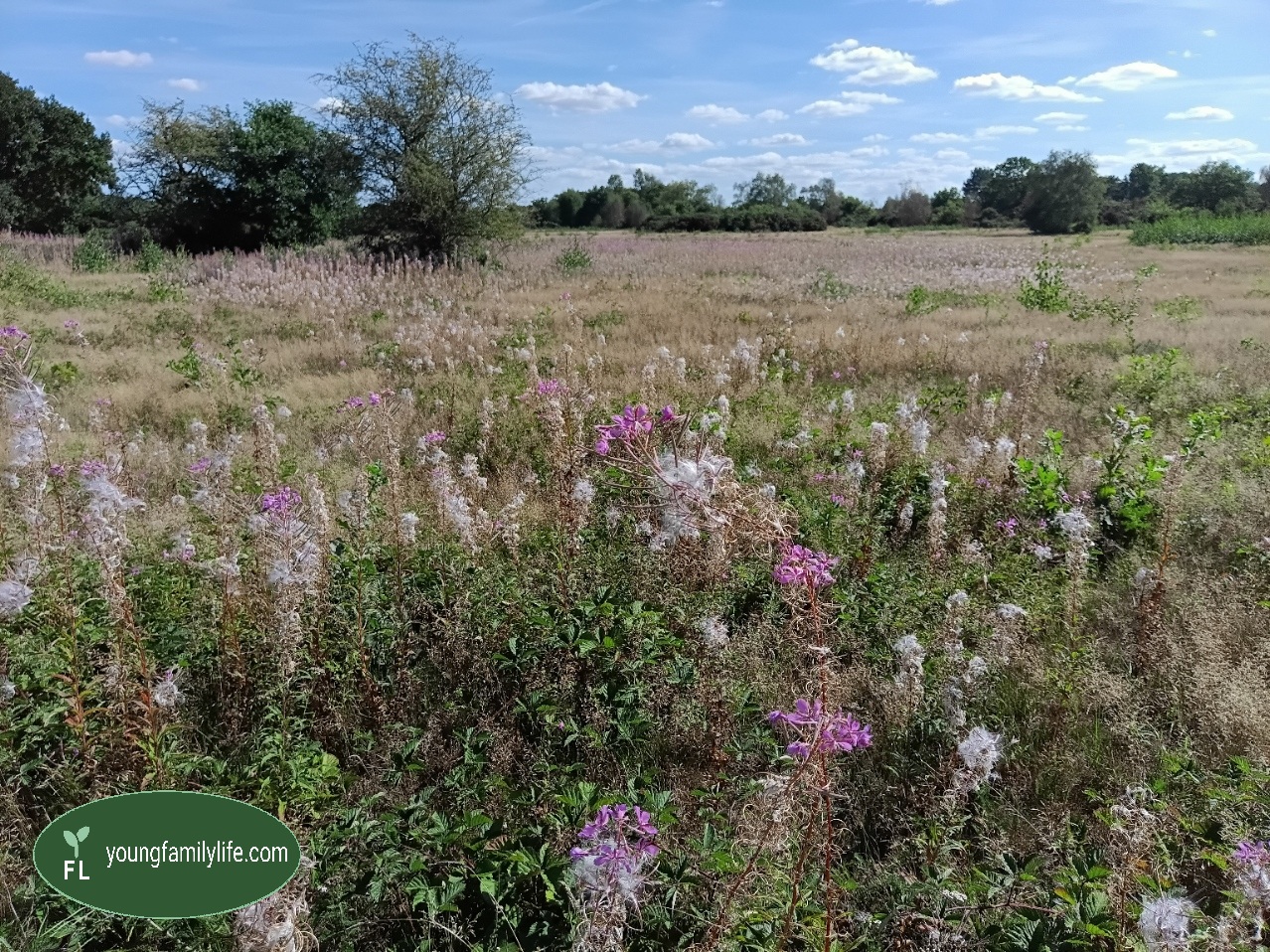
This August was a hot, dry one on the Common. The grass across the Hards turned brown early, growth stalled, and some of the smaller plants died back altogether. It's tempting to reach for the word “drought” to describe that — but I think that word deserves more care than we usually give it.
In parts of the world, drought means livestock and wild animals dying for lack of water. It means wells running dry, harvests failing, and people's lives and communities put at real risk. That's what the word actually means at its sharpest, and it's worth remembering that when we're tempted to use it for a brown lawn.
What happened on the Common this August was something much older and much less alarming: dry-spell dormancy. Grass and many of the smaller plants on the Hards have evolved to do exactly this — stop growing, die back at the surface, and wait. It's a survival strategy, not a crisis. And it's already reversing: with the rain that's followed, the green is coming back, the way it always has.
None of which is to say heat and dry spells don't matter, or that changing patterns of both aren't worth taking seriously. But there's a difference between “the Common looked stressed for a few weeks in August” and “drought” in the sense that actually costs lives elsewhere in the world — and I think that distinction is worth holding onto, rather than letting the word drift.
A Good Summer for Wildlife, By the Look of It
If the heat had genuinely starved the Common of food or water, I'd expect to see it in the wildlife — thin animals, fewer of them, signs of struggle. I've seen the opposite. Over the past few weeks I've come across grass snakes and slow worms that looked in excellent condition, barn owls and sparrowhawks hunting regularly, otters along the river, and what feels like an unusually busy summer for insects, invertebrates, birds, rodents and other small mammals generally. None of that is a formal survey — it's one enthusiastic amateur's eye, not a count — but taken together, it doesn't look like a Common that went without. If anything, it looks like a place that's been thriving.
There's a more official sign pointing the same way. Falcon Meadow, just along the Waveney from the Common, became one of England's newly designated bathing water sites this May, and the River Waveney Trust and Environment Agency have been sampling it regularly through the season. The results I've seen reported have been reassuring — bacteria levels well within safe limits for swimmers. A river that's staying clean through a hot, dry summer, with reduced flow to dilute anything going wrong, is another sign that the wider Waveney valley — Common included — has come through this stretch of weather in good shape rather than under strain.
Who Actually Owns the Common
Outney Common looks like it belongs to everyone. It doesn't, and understanding why tells you something about how a lot of English land actually works.
The Common's roughly 400 acres, inside that big loop the Waveney cuts north of town, are legally private. They're divided into around 300 “goings” — old grazing rights, some of them attached to specific Bungay properties for the best part of a thousand years — now held by around fifty individuals and organisations. The Bungay Town Trust alone owns 62 of them. Together, those going-holders are the Common Owners, and they run the place through a Chairman and six elected Common Reeves.
So what makes it a common isn't who owns it. It's the rights sitting on top of that ownership — rights that survived a long, largely forgotten war over English land. Between the 1750s and the 1880s, Parliament passed over 5,200 separate Enclosure Acts, each one fencing off a parish's shared land into private hands, one Act at a time. Most English commons didn't survive that. Bungay's did — which is genuinely unusual, and part of why it's worth understanding rather than just enjoying.
There's also a loose end in the Common's own paperwork I couldn't tie up. Its official commons register entry (CL.3) has a Commons Commissioner's decision on file, and local accounts of what that decision actually concerns don't agree with each other — something about a registration difficulty decades ago, with unclear consequences for the Common's legal status. I've set out both readings honestly in the full Repositorium essay rather than pretend I've settled it. If anyone reading this has family memory, old paperwork, or just a clearer account than I could find — I'd genuinely like to hear it.
For the fuller version of this — the geography, the enclosure history in full, the national Right to Roam settlement it sits inside — the Repositorium essay goes further: Outney Common: What “Common” Actually Means.
The Common After Dark
A Dark Sky, and Orion Returning
One thing the Common has going for it that's easy to take for granted: from the middle of it, you're far enough from the street lighting of the surrounding towns to get a genuinely dark sky and a decent view of the stars. Astronomy is another area where I'm firmly an amateur, but as August wore on and the nights started drawing in again, I noticed Orion beginning to climb back into the early morning sky — it's been absent, lost in the summer daylight, since the spring.
Orion isn't hard to find once you know what you're looking for: three bright stars in a short, even line — Alnitak, Alnilam and Mintaka — form the “belt,” with the whole constellation built outward from there. To the naked eye they look like ordinary single stars, but they're not: Alnitak is actually a triple system of hot blue stars, and Mintaka a system of five, including the closest eclipsing binary pair to Earth — two stars so close together that from our distance they appear as one, occasionally dimming each other as they pass in front of one another. Alnilam, sitting between them, is the odd one out — a single, enormous blue supergiant, doing on its own what the other two need several stars to manage.
None of that multiplicity is something I'll ever actually resolve with my own eyes — no binoculars, no telescope, just what's visible standing on the Common at night. But I don't think that matters. Knowing what's genuinely happening behind that single point of light is enough to make looking up more interesting, even when what you're looking at still just looks like three stars in a row.
Above the belt sits Betelgeuse, a red supergiant around 650 light-years away, so large that if it replaced the Sun its surface would extend out past Mars. It's nearing the end of its life, astronomically speaking, and will eventually go supernova — though “eventually” could mean anywhere in the next 100,000 years, so nobody's holding their breath.
Hanging below the belt is Orion's “sword,” and the middle point of light in it isn't a star at all — it's the Orion Nebula, a vast stellar nursery around 1,300 light-years away where new stars are actively forming. I'd originally mistaken it for the Andromeda Galaxy, which was a fair mix-up on my part but a genuinely different kind of object: Andromeda is an entire separate galaxy, 2.5 million light-years off, while the Orion Nebula is a cloud of gas and dust much closer to home, well within our own Milky Way. Both look like a small fuzzy smudge to the naked eye, which is exactly how I managed to confuse them.
Whichever of them you're looking at, it's a reminder that the Common offers more than it first appears — not just what's living on it, but what you can see above it once it's properly dark.
Satellites, and Why Some Have Gone Quiet
Alongside the stars, there's usually something artificial moving across the sky too — a satellite catching the sun is easy to spot, a steady point of light gliding across in a dead-straight line, quite unlike the fixed stars around it. I've noticed fewer of the Starlink satellites lately, though, the ones that used to appear in loose trains not long after launch, and wondered whether they'd moved orbit, been dimmed deliberately, or whether it was just the Moon's brightness drowning them out.
It turns out all three are true at once. SpaceX has been actively working to make Starlink satellites harder to see since around 2020, first with darker coatings and sun-visors, and more recently — from January 2025 — by lowering around 300 of them to a noticeably lower orbit specifically to cut down their reflected brightness. On top of that, the Moon has been unhelpful for spotting anything faint just lately: as I write this, it's a waning gibbous at around 83% illumination, only a few days past full, which washes out plenty that a darker sky would show. So if the satellites have seemed harder to catch, it's not just imagination — they really have been dimmed on purpose, and the Moon's been making it worse regardless.
Whatever the astronomers' understandable objections to them, it's worth remembering what those satellites are actually for. For people living somewhere their government blocks the internet, or where no terrestrial connection reaches at all, that constellation overhead is often the only route to information — the good, the bad, the scientific, and the misleading, all of it. Access to information, even flawed and unfiltered, is a kind of liberation of the mind. That's worth holding in view alongside the astronomy.
References
- British Trust for Ornithology (BTO) — Cuckoo Tracking Project, 2026 cohort updates
- Met Office — Spring 2026 and Summer 2026 regional weather statistics; May 2026 county rainfall breakdown
- River Waveney Trust — Falcon Meadow bathing water designation and monitoring
- Bungay Town Trust — Bungay Common (bungaytowntrust.uk)
- Association of Commons Registration Authorities (ACRA) — common land register, unit CL.3 “Outney Common — Bungay — Waveney D”
- Space.com, AMNH, Wikipedia — Orion constellation, Orion's Belt (Alnitak, Alnilam, Mintaka), Betelgeuse, Orion Nebula (M42)
- Royal Museums Greenwich — Full Moon calendar 2026, lunar phase data
- Assessment of Brightness Mitigation Practices for Starlink Satellites (arXiv preprint); SpaceX FCC filings on Starlink orbit-lowering, 2025
Topics: #OutneyCommon #Bungay #LocalHistory #Wildlife #Astronomy #RiverWaveney