A pattern that looks obvious and isn't
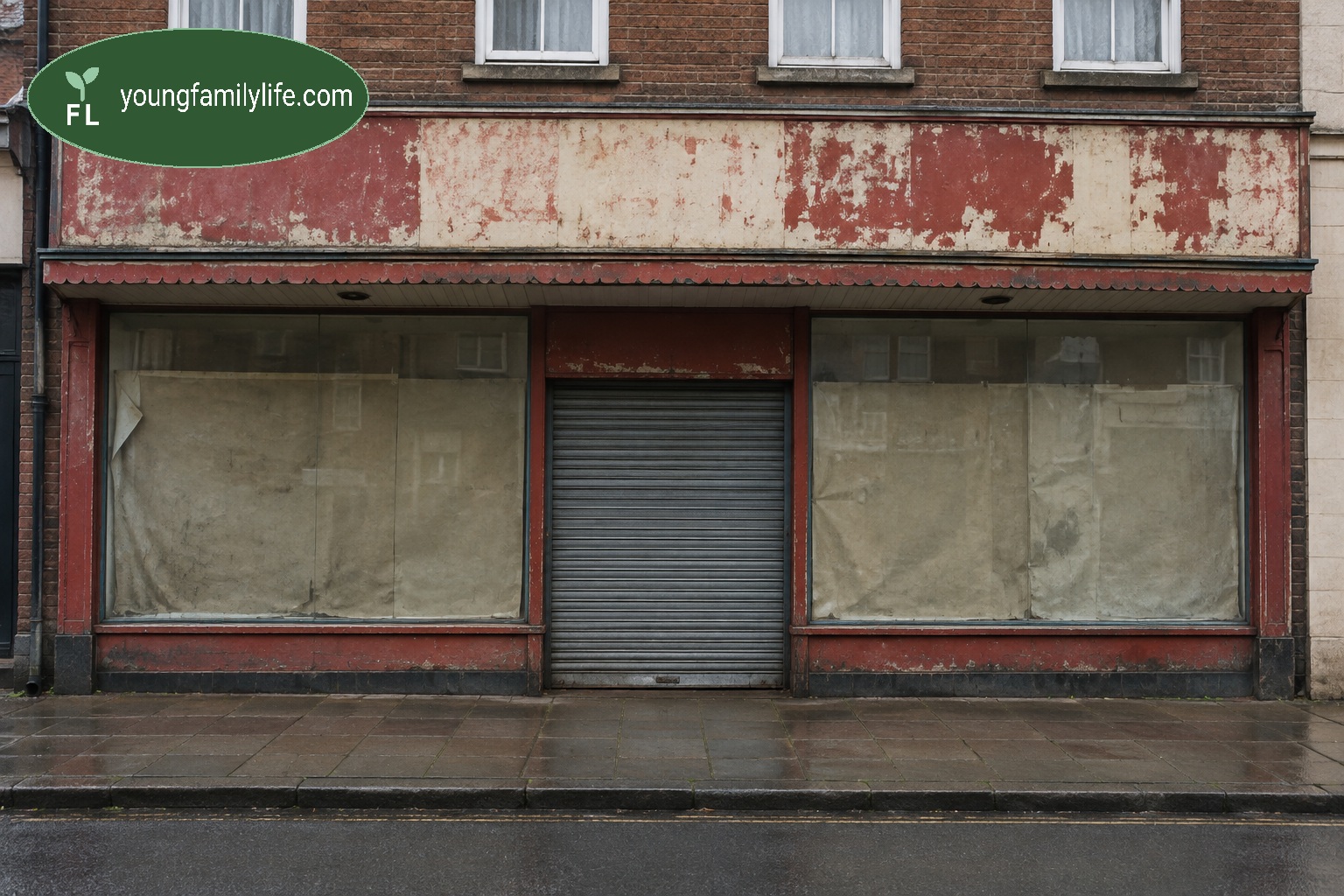
Woolworths, BHS and Wilko all disappeared from the British high street within fifteen years of each other, and it would be easy to read all three as the same story: a race to the bottom on price, ending where races to the bottom always end. That story is wrong, on the evidence each collapse actually left behind. None of the three failed primarily because they were cheap. All three failed because of debt, muddled identity, and leadership decisions that had little to do with what their goods cost — and the clearest proof of that is the chain whose own 99-year history supplies both ends of the argument.
“Nothing Over Sixpence”
The first British Woolworth's opened on Church Street, Liverpool, on 5 November 1909, built entirely around a single, absolute promise: nothing in the store would cost more than sixpence — 2½p, roughly £2.11 in today's money. It was not a marketing slogan layered onto an ordinary shop. It was the whole model. The managing director's opening speech promised branches would soon appear “across the North and beyond,” and the press response the next morning ranged from indifferent to openly hostile — the Daily Chronicle mocked the inclusion of hunting knives in the range as “un-British,” apparently unaware, as Woolworth's own directors noted, that Liverpool had no wild bears to hunt.
The sixpence ceiling was not a soft aspiration. It held, without exception, for over three decades, driving the chain from that single Liverpool store to 767 branches by the outbreak of the Second World War — more than 400 of them opened during the 1930s, at the height of the Great Depression, when a hard price ceiling was exactly what cash-strapped customers wanted. The company only abandoned it in 1940, at the height of the Battle of Britain, when wartime inflation made a fixed sixpenny maximum arithmetically impossible to sustain, and even then treated the change as a last resort rather than a strategic choice.
This is worth sitting with before the collapse story begins: Woolworths' founding model was a far more rigid, more extreme price discipline than almost any modern discount retailer operates under today, and it thrived under that discipline for over thirty years, through a global depression. Whatever eventually killed Woolworths, the historical record does not support blaming the sixpence ceiling itself — if anything, the ceiling is the best-documented example on the British high street of cheap, disciplined and durable existing simultaneously.
What actually killed it, seventy years later
Woolworths finally collapsed on 26 November 2008, when the retail and distribution arms entered administration under Deloitte, with debts of £385 million and a pension deficit it could not resolve. All 807 remaining stores closed in stages between 27 December 2008 and 6 January 2009, at a cost of around 27,000 jobs. The proximate cause was familiar: credit insurers had stopped covering suppliers who dealt with Woolworths in its final months, forcing it to pay cash upfront for stock it could not afford, the same mechanism that would end Wilko fifteen years later.
But the sixpence ceiling had been gone since 1940. Nearly seventy years separate that decision from the 2008 collapse, and what filled the gap was not cheapness but its absence of a clear identity: a chain that had drifted into being, in the words used repeatedly by commentators at the time, a “jack of all trades,” beaten by supermarkets on food, by online retailers on entertainment and music, and by nobody in particular on much else, because it no longer stood clearly for anything. Some retail historians trace the rot specifically to 2001, when Woolworths demerged from the Kingfisher conglomerate that had owned it since 1982 — a deal that saw 182 of the chain's freehold properties sold off beforehand, saddling the newly independent Woolworths with rent it had never previously had to pay. Sir Geoff Mulcahy, the Kingfisher chairman who had run Woolworths for two decades and who oversaw that demerger, later called Deloitte's decision to liquidate the whole chain “disgraceful,” arguing it could have been saved — a claim retail historians have treated with some scepticism, given his own role in the freehold sale some observers blame for weakening the company in the first place. A £50 million rescue offer from the Icelandic investment vehicle Baugur and the retail entrepreneur Malcolm Walker was rejected in September 2008, months before the collapse; the chief executive who oversaw that rejection had himself only recently replaced another, in a churn that suggests a board without a settled view of what the company was for.
None of this is a story about a price point. It is a story about debt, a stripped balance sheet, and thirty years of drift after the one thing that had ever given the company a clear identity was abandoned as a wartime necessity and never replaced with anything as coherent.
BHS: caught in the middle, not priced too low
BHS collapsed in 2016 after a pension scandal and a contested sale of the company for £1 to a consortium with little retail experience. The parliamentary inquiry into its failure, jointly conducted by the Work and Pensions and Business, Innovation and Skills Committees, placed the blame squarely on the company's former owner and its leadership's extraction of value from the business — not on BHS being too downmarket, too cheap, or insufficiently premium. If anything, commentary around the collapse repeatedly credited Primark — a considerably cheaper retailer — with having out-executed BHS specifically by being more consistently, more disciplined cheap, while sharper fashion retailers took the other end of BHS's business. BHS's problem was having no clear position between those two pressures, not sitting at the wrong end of the price spectrum.
Wilko: the collapse that came from trying to stop being cheap
Wilko, a family-owned hardware and homeware chain founded in 1930, collapsed into administration on 10 August 2023, putting around 12,000 jobs at risk across roughly 400 stores. Talks with the private equity firms Gordon Brothers and Alteri had failed to secure emergency funding; the company's own chief executive said it had “left no stone unturned” before conceding defeat.
What makes Wilko's case sharper than a simple cash-flow story is a piece of evidence its own staff later gave to a House of Commons committee. A GMB national officer told the Business and Trade Committee that Wilko's 2012 rebrand from “Wilkinson” to “Wilko” had come with an internal ambition staff were explicitly told about: “there was this attempt to move to almost a John Lewis-type model.” When the union raised concerns about this drift away from Wilko's discount identity in December 2022, the then chief executive “unequivocally” denied Wilko was a discount retailer at all — eight months before the company collapsed. GMB's Nadine Houghton put the union's verdict plainly once the administration was announced: the situation was “sadly, entirely avoidable” with better management. Wilko did not fail because it was too cheap. On its own staff's evidence, it failed partly because its own leadership had spent a decade trying to convince the business it wasn't.
Primark: cheap, disciplined, and still standing
Primark offers the clearest present-day counter-case, and the mechanism behind its durability is a matter of public record rather than speculation. Primark's own head of ethical trade, giving evidence to a House of Commons committee in 2018, stated plainly that the company's decision not to advertise saves it an estimated £100–150 million a year compared with larger rivals — savings funnelled directly into keeping prices low. That is not a retailer being secretly less cheap than it looks. It is a retailer whose cheapness rests on a genuinely disciplined operating model — no advertising spend, no loyalty scheme, considerable buying power — rather than on hoping thin margins somewhere else will paper over the gap.
The actual pattern
Line up all four cases and the pattern is not “cheap fails, quality survives.” Woolworths thrived for thirty years under the most extreme price discipline of any chain in this essay, then took another seventy years of drift and debt to actually collapse. BHS failed with no clear position at either end of the market. Wilko's own staff link its decline to a deliberate attempt to stop being what it was. Primark, cheaper than any of them, remains standing on the strength of a coherent, disciplined operating model built specifically to make its low prices sustainable rather than accidental.
The pattern that actually holds is this: a clear, disciplined, consistently executed position — at whichever end of the market a business chooses to occupy — tends to survive. A muddled, debt-loaded, strategically drifting one tends not to, regardless of what its price tags say. Woolworths supplies both halves of that argument inside a single 99-year history: the sixpence ceiling as the clearest proof that rigid cheapness can be a durable, winning discipline, and the seventy years that followed its abandonment as the clearest proof of what happens once a business loses that discipline and never finds another one to replace it.
References
Accountancy Age (2008) ‘Breaking News: Deloitte Appointed Administrator to Woolworths’, 26 November 2008.
AccountingWeb (2008) ‘Sir Geoff Mulcahy Attacks Woolworths Administration’, December 2008.
House of Commons, Business, Innovation and Skills Committee and Work and Pensions Committee (2016) BHS, Fourth Joint Report of Session 2016–17. London: House of Commons.
House of Commons, Business and Trade Committee (2023) Oral evidence on the collapse of Wilko. London: House of Commons.
House of Commons, Environmental Audit Committee (2018) Oral evidence: Sustainability of the Fashion Industry, HC 1148, 27 November 2018. London: House of Commons.
LBC News (2023) ‘Wilko Collapses into Administration as 400 Shops and 12,000 Jobs at Risk’, 10 August 2023.
Reuters, republished by Gulf News (2023) ‘UK Retailer Wilko Collapses, Putting 12,000 Jobs at Risk’, 10 August 2023.
Wikipedia (2026) ‘Woolworths (United Kingdom)’. [Secondary source, collating BBC and other press reporting on the November 2008 administration; used here for the £385 million debt figure and store/job-loss numbers, cross-checked against contemporaneous press reports.]
Woolworths Museum (n.d.) The First British Woolworth's, When Nothing at Woolworth's Was Over Sixpence, and Keeping Prices Below Sixpence in the 1930s. [Specialist historical archive; formal academic citation for the 1909-1940 history not yet located, but the specific claim that the limit held without exception for over 30 years was checked directly against this source, 25 Sep 2026, following a query from Steve: unlike the US and German sister companies, which dropped their own price ceilings in 1935 and 1931 respectively, the British board deliberately kept the sixpence limit intact through the 1930s by redesigning products, splitting items for individual sale, and pressuring suppliers on margin, rather than by broadening into higher-priced ranges. Confirmed, not an assumption.]
Topics: #Woolworths #BHS #Wilko #Primark #RetailHistory #HighStreet #BusinessFailure #PricePositioning